
The Cayenne Turbo Electric is taking on something incredible.
This time, Porsche has made an announcement titled "Precision meets power: Porsche Cayenne Electric accelerates into the eye of a storm."
A literal translation of this would be "A Fusion of Precision and Power: The Porsche Cayenne Electric Accelerates into the Eye of the Storm," which made me think, "Wait, has the Cayenne EV finally become a storm chaser, chasing the hurricane and heading straight for its eye?" But I was wrong (lol).
Even so, what they did was as incredible as walking into the eye of a typhoon.
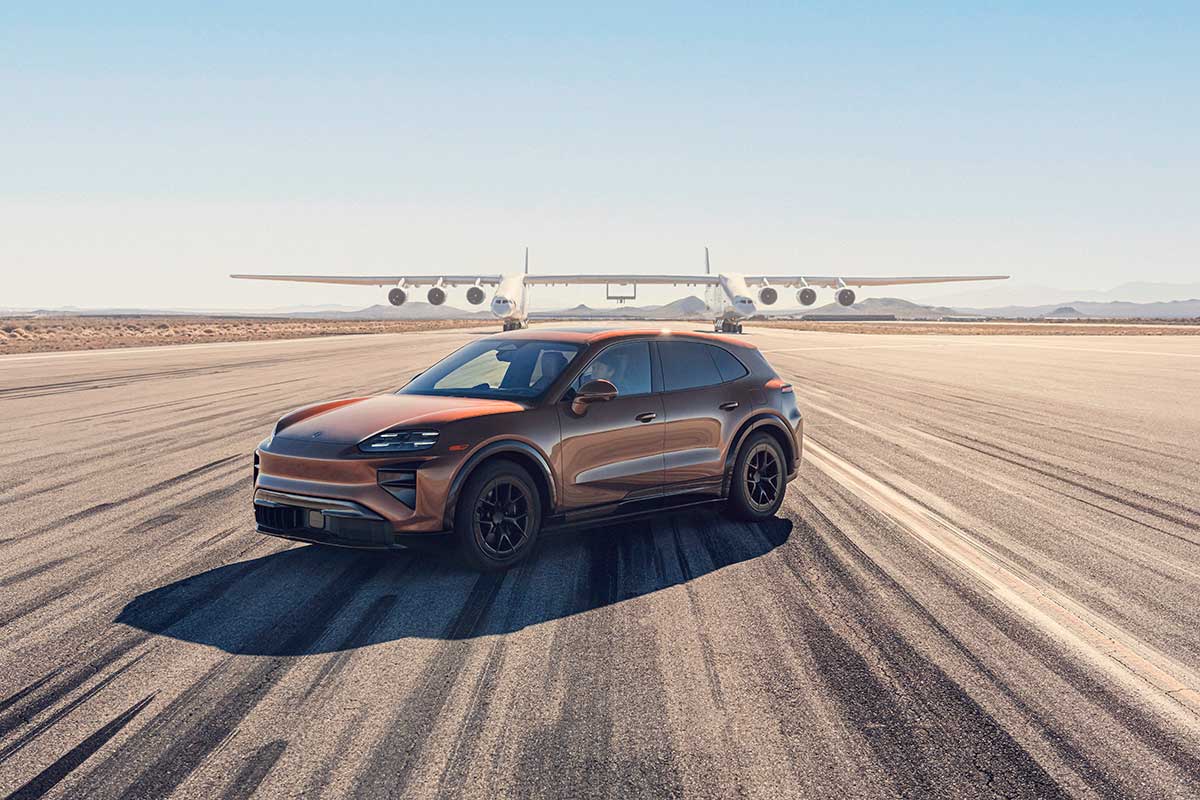
What they did was, at the Mojave Air and Space Port in California, USA, they attempted a rather bizarre challenge: driving a Cayenne Turbo Electric directly beneath the world's largest aircraft, "Roc," during its takeoff and landing.
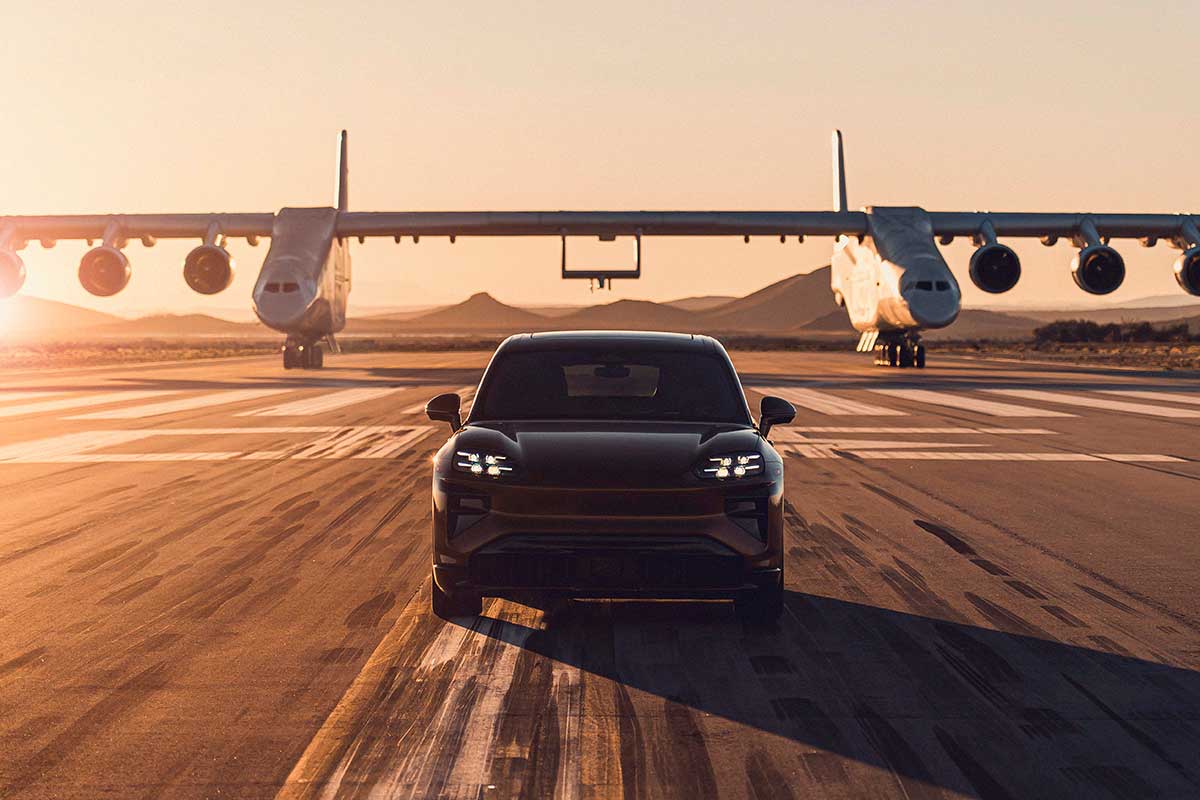
Moreover, this challenge didn't involve driving under a stationary plane; rather, the Cayenne was driving at a speed exceeding 270 km/h directly beneath a massive aircraft taking off with its six jet engines.
No, this is pretty crazy!
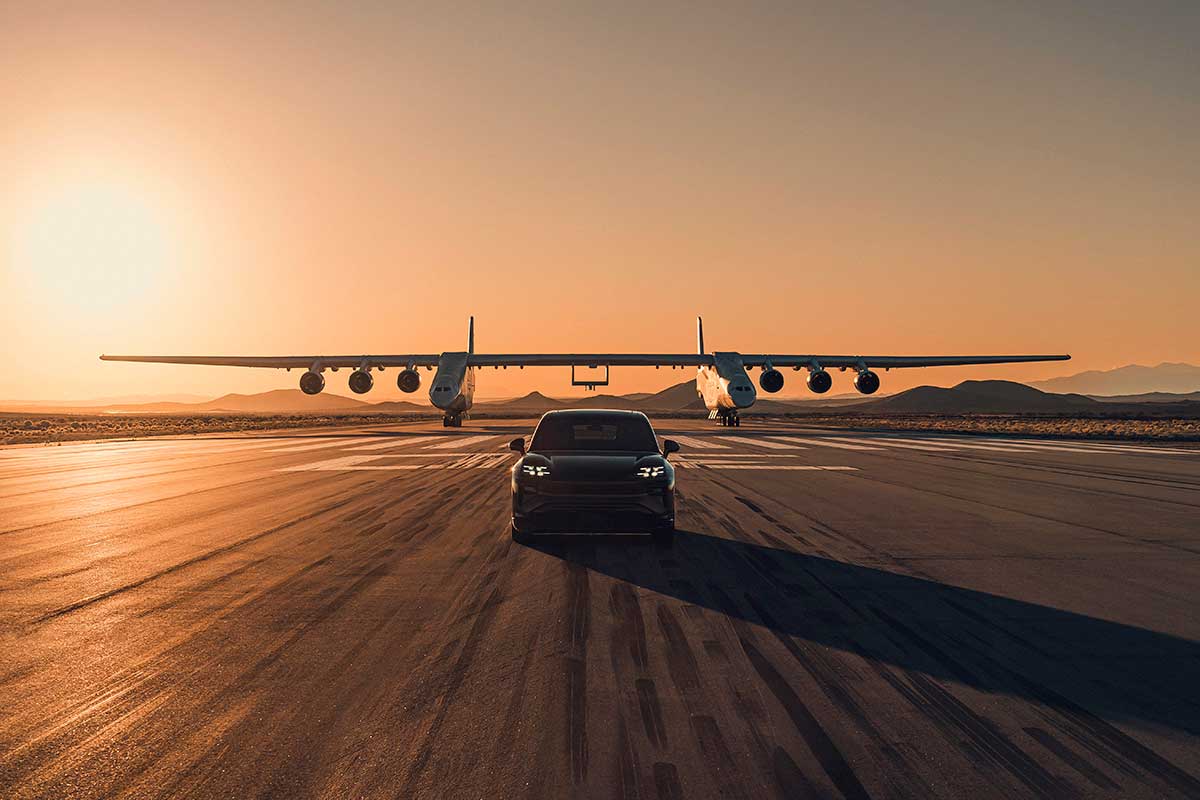
The world's largest aircraft, "Roc," and the Cayenne Turbo-Electric
The aircraft that Cayenne drove alongside this time was called "Roc," operated by Stratolaunch. It's a massive, two-fuselage aircraft developed as a platform for launching spacecraft and hypersonic flight test aircraft from the air.
Its wingspan is 385 feet (approximately 117 meters).
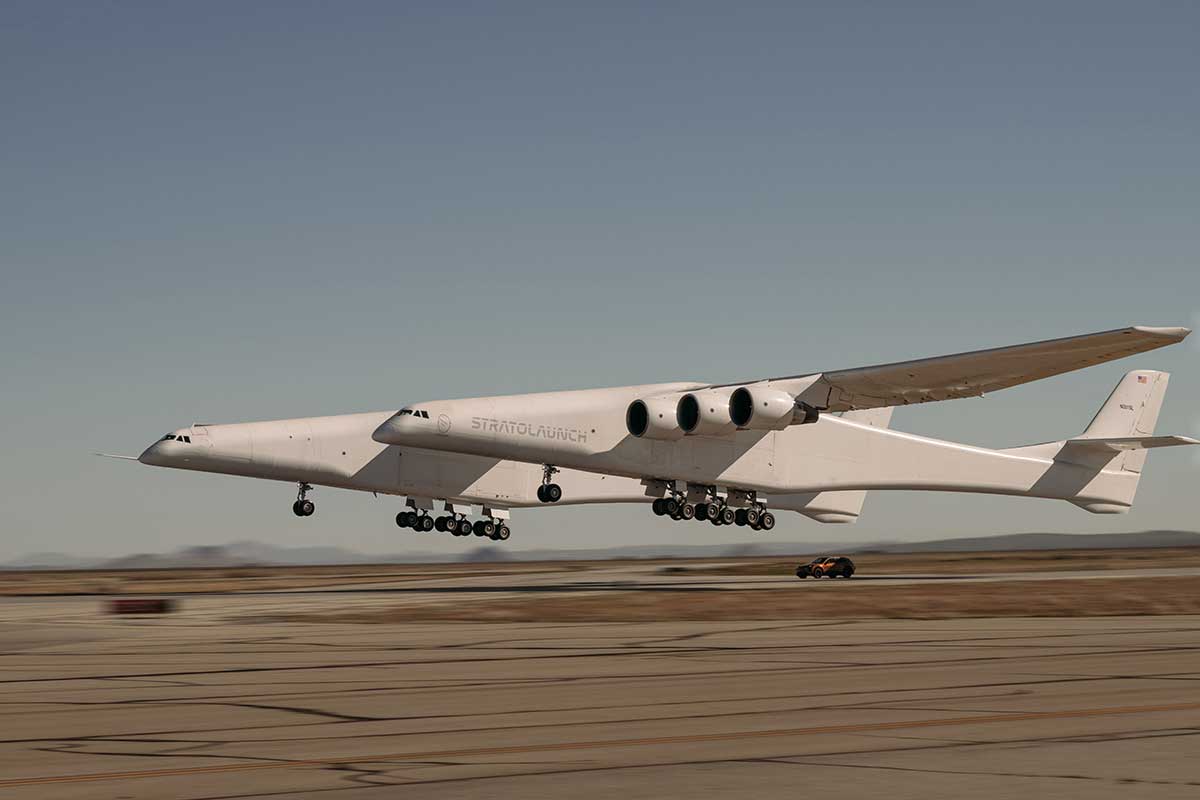
The six engines produce a total thrust of 340,500 pounds (equivalent to a force of approximately 154 tons), and the maximum takeoff weight is 1.3 million pounds (approximately 590 tons).
According to Porsche, the Roc is a larger and more powerful aircraft than the Airbus A380, and the Cayenne Turbo EV is currently the most powerful production car Porsche has ever produced.
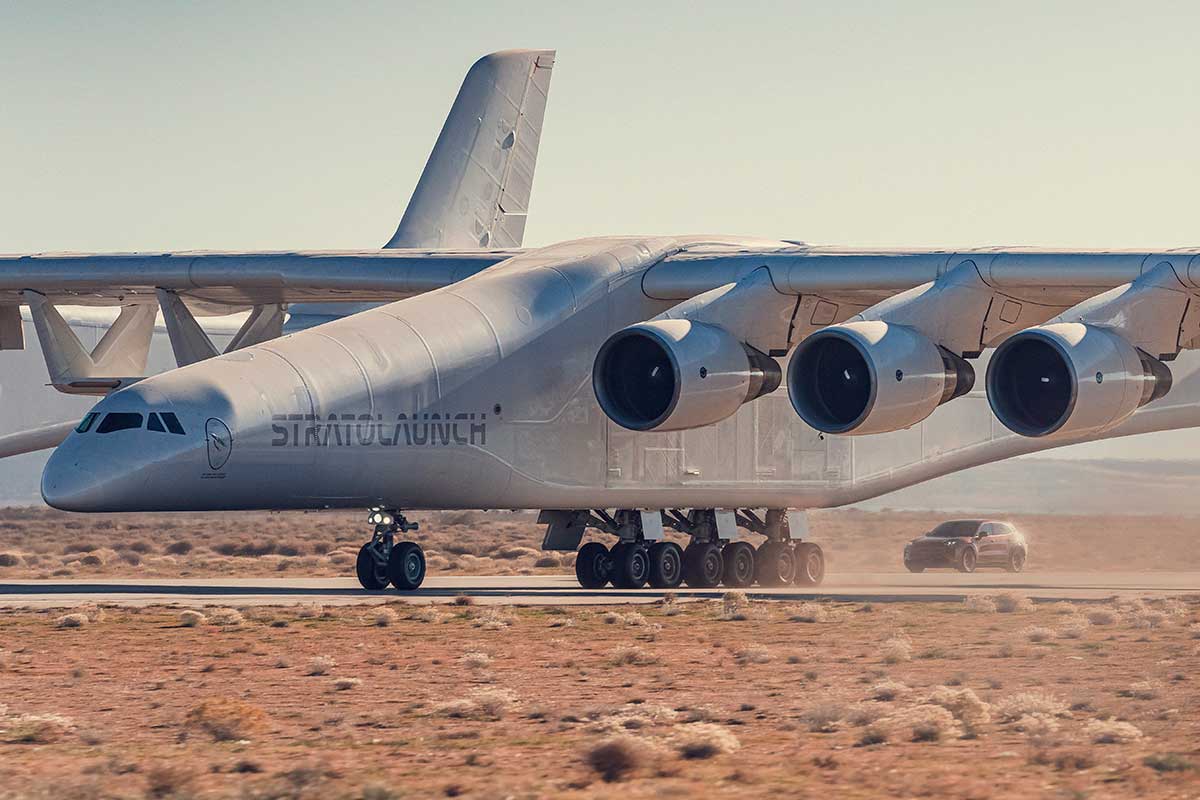
The Cayenne Turbo EV has a maximum output of 1,139 hp and accelerates from 0-60 mph (approximately 96 km/h) in just 2.4 seconds.
Furthermore, it is equipped with active aerodynamics to enhance stability at high speeds.
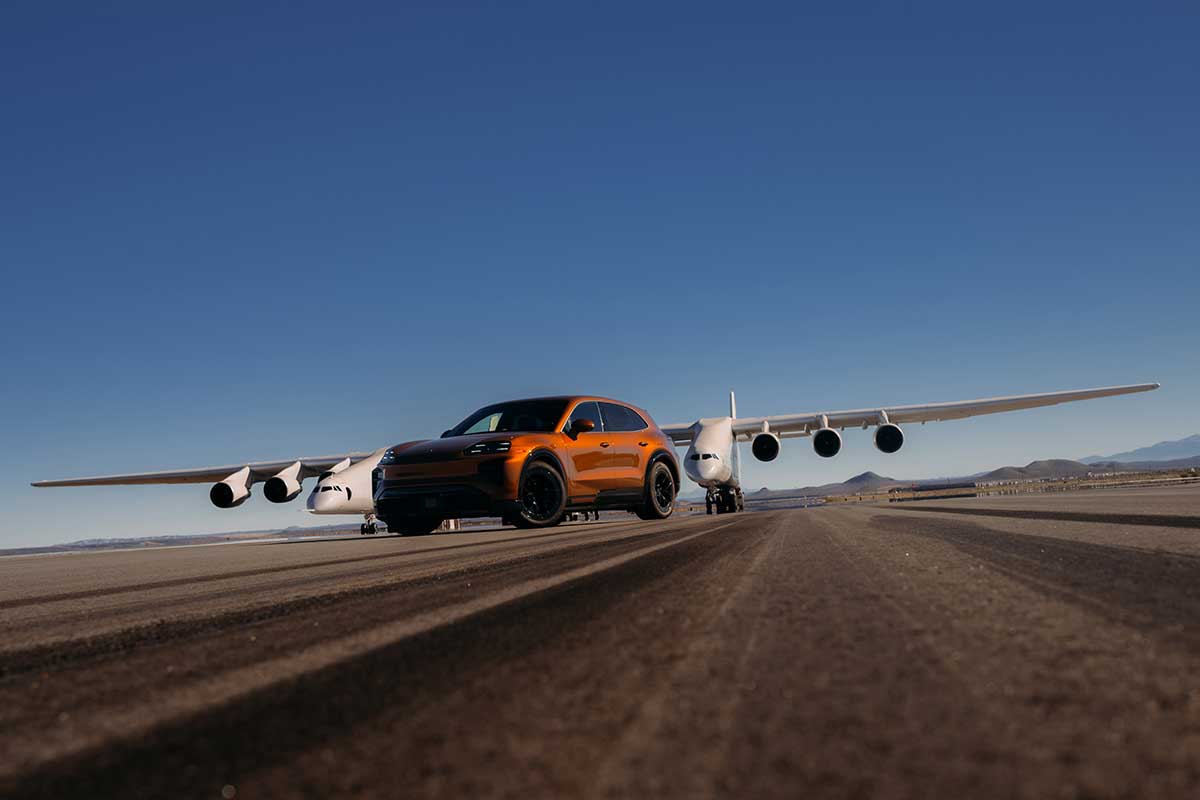
It's not just a drag race; precision is key.
Apparently, what was more important in this challenge than speed was "accuracy."
What this means is that with a massive aircraft like the ROC, tremendous jets and turbulence are generated beneath the fuselage by the six jet engines during takeoff and landing, so it's obviously reckless to drive a car through such jets and turbulence.
However, when Stratolaunch engineers analyzed the airflow around Roc, they discovered a "small space" where the airflow is calmer than the surrounding area, slightly behind the rear of the landing gear and in front of the tail fin.
It's like the "eye" in the middle of a storm.
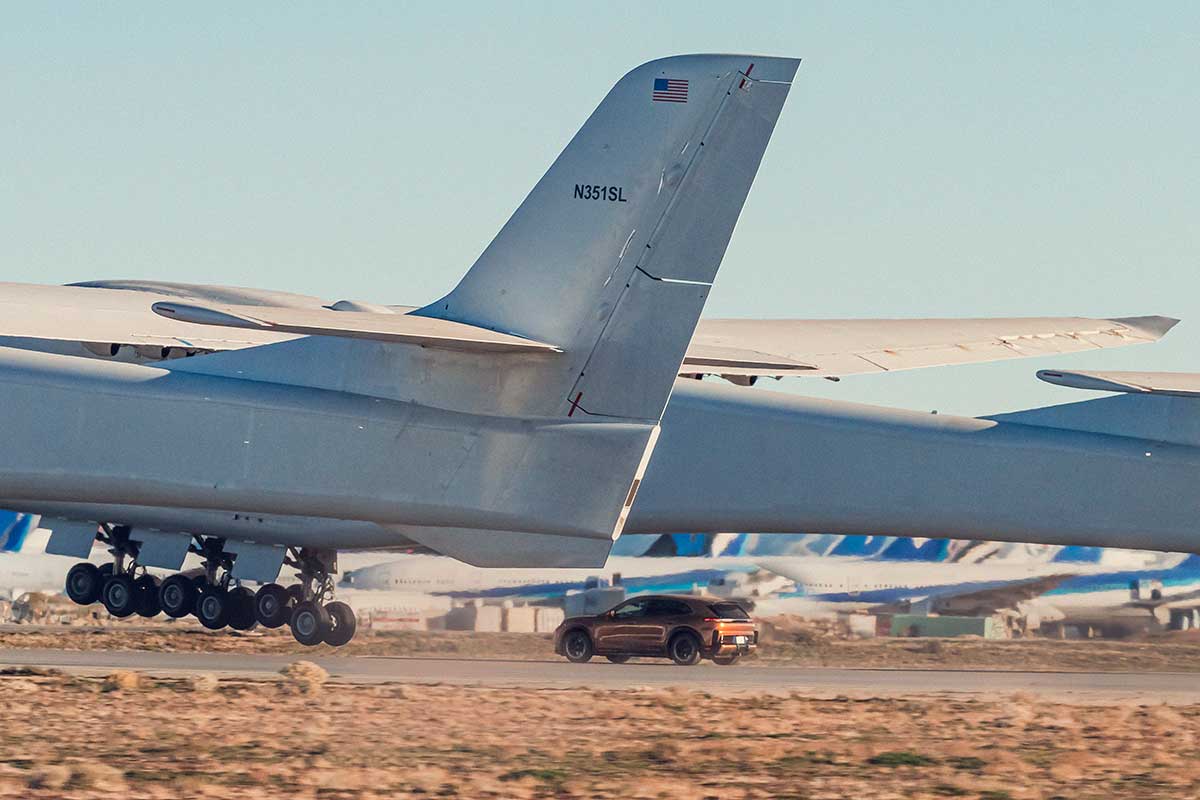
Ahhh, the plot point is finally resolved. Now I understand the meaning of the initial line, "The Cayenne EV is accelerating towards the eye of the storm."
The plan is for the Cayenne to enter this small calm space amidst the jets of water and turbulence, which are like the eye of a typhoon (storm), and move together with Roc.
That said, from the moment the plane starts moving until takeoff, they have to stay precisely within this small space while matching the acceleration of the Roc, which is an incredibly challenging task, isn't it?
Being fast isn't necessarily good, but being slow isn't good either.
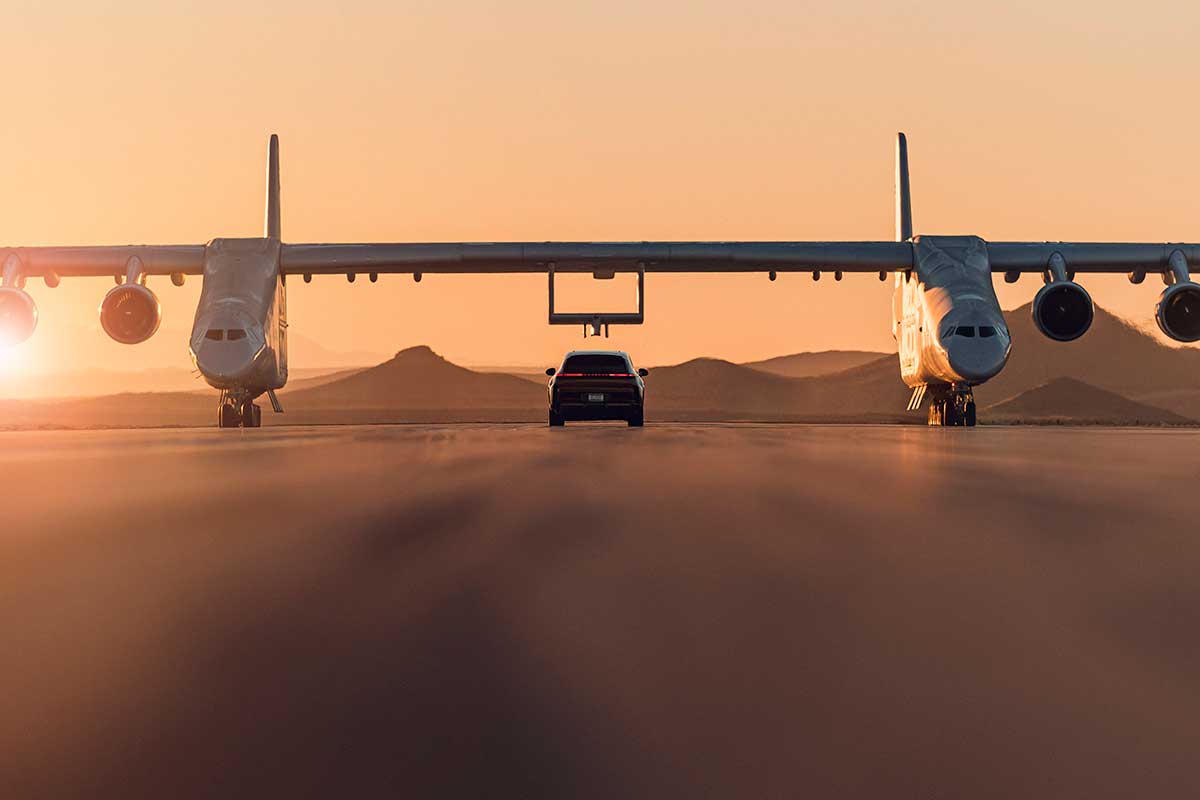
The Cayenne Turbo EV can exceed 270 km/h.
The driver of this Cayenne Turbo EV for this challenge was Patrick Long, a former Porsche factory driver and endurance racer.
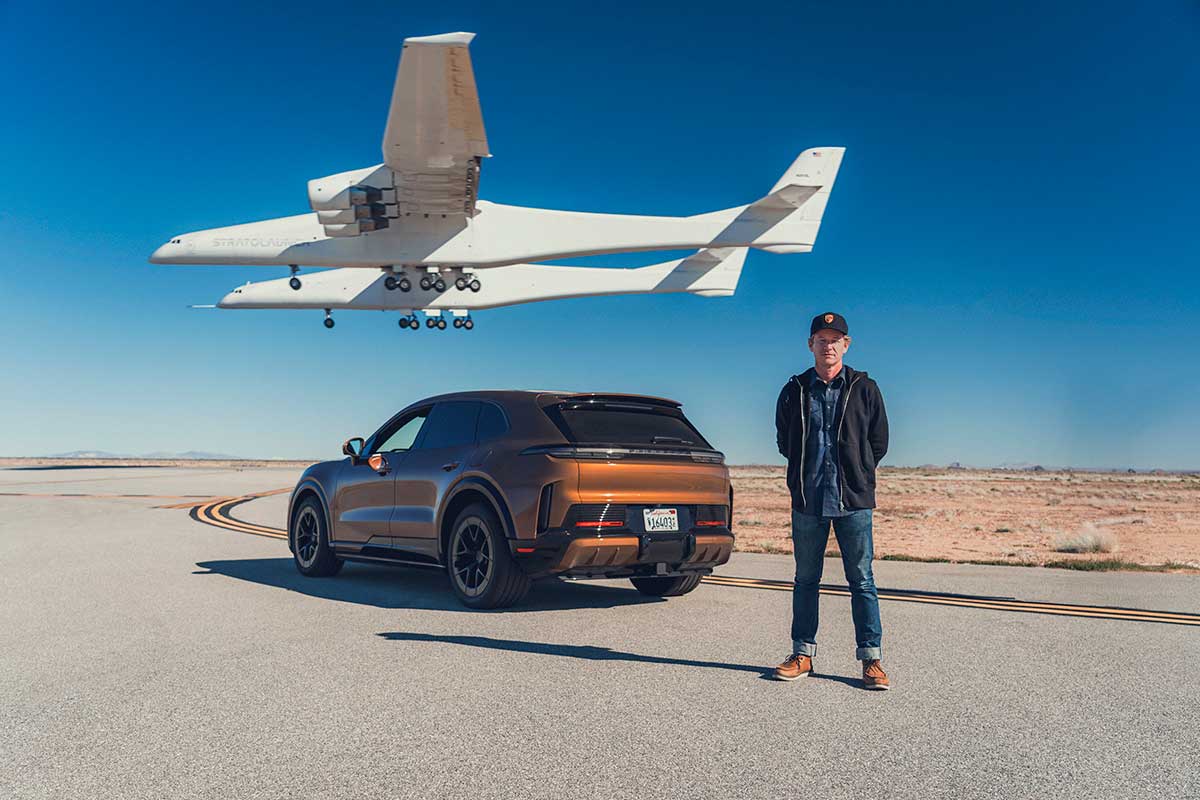
Immediately after the start, only the minimum amount of power is used to maintain the relative position to the ROC's landing gear.
Then, as the ROC's six engines truly increase thrust and the speed exceeds 100 mph (approximately 161 km/h), the Cayenne switches to Boost mode.
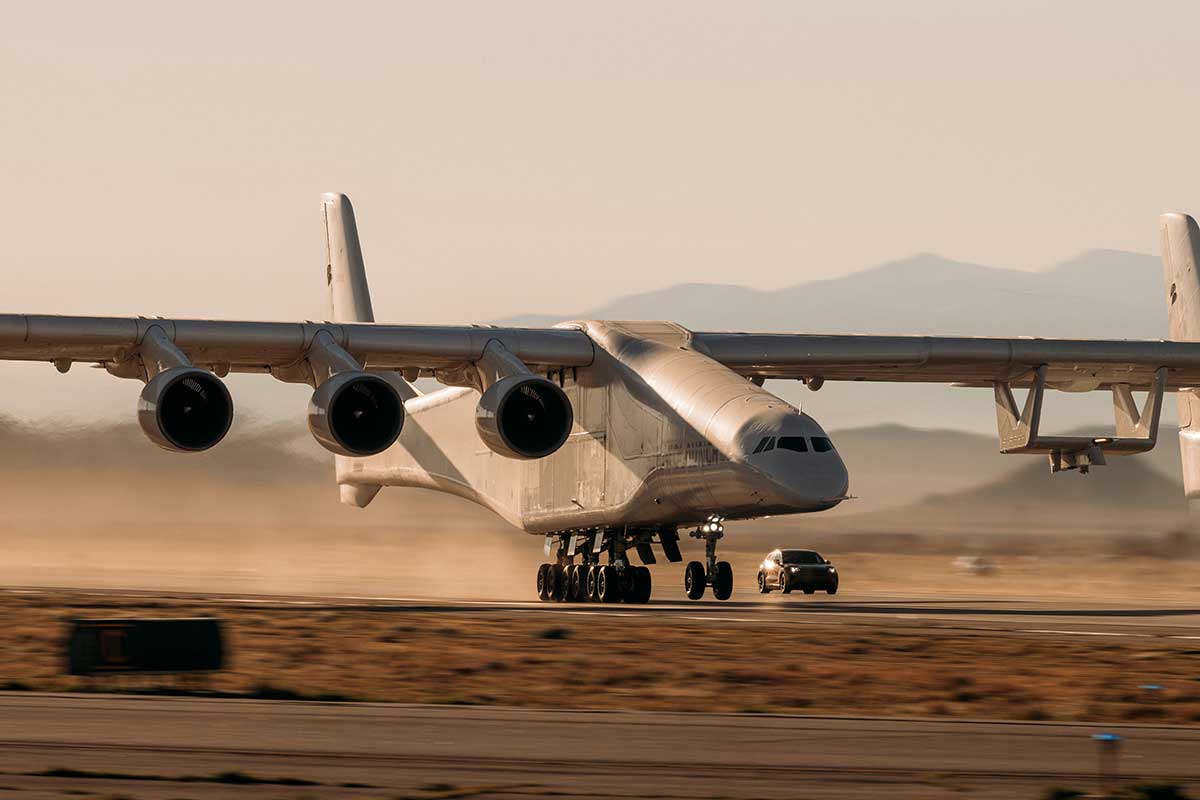
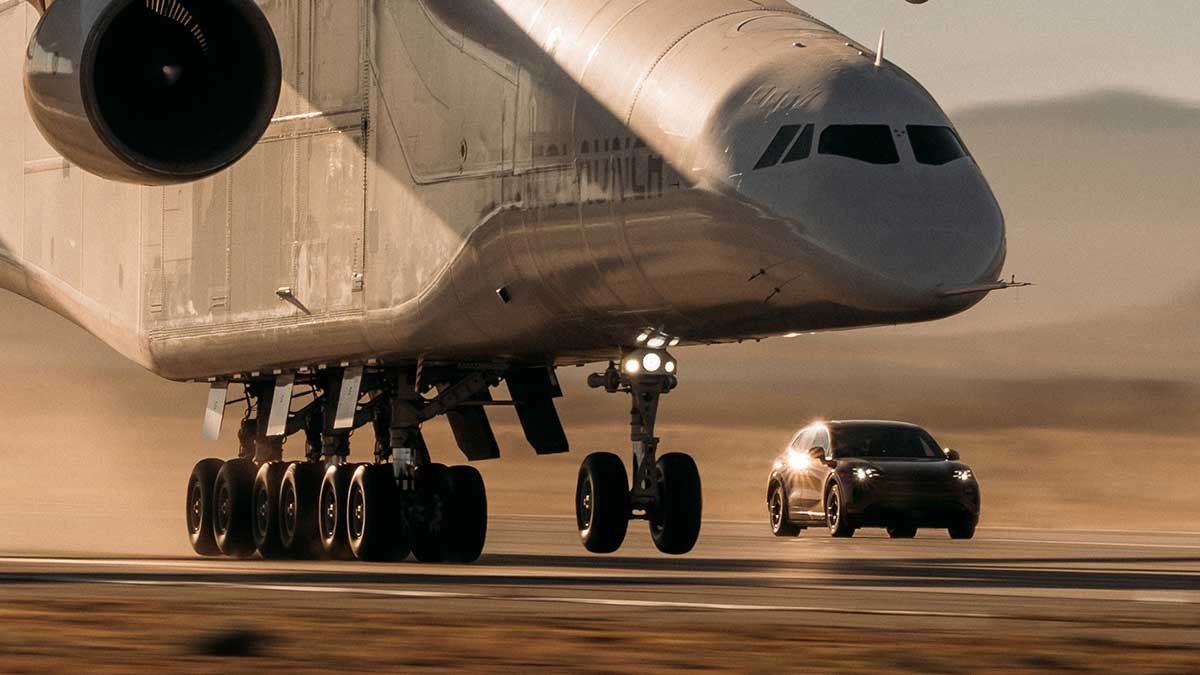
Using Cayenne's power, I followed Roc, and finally Roc took off.
The image of a massive aircraft rising directly above the Cayenne, with its six engines pointed towards it, is terrifying to even imagine.
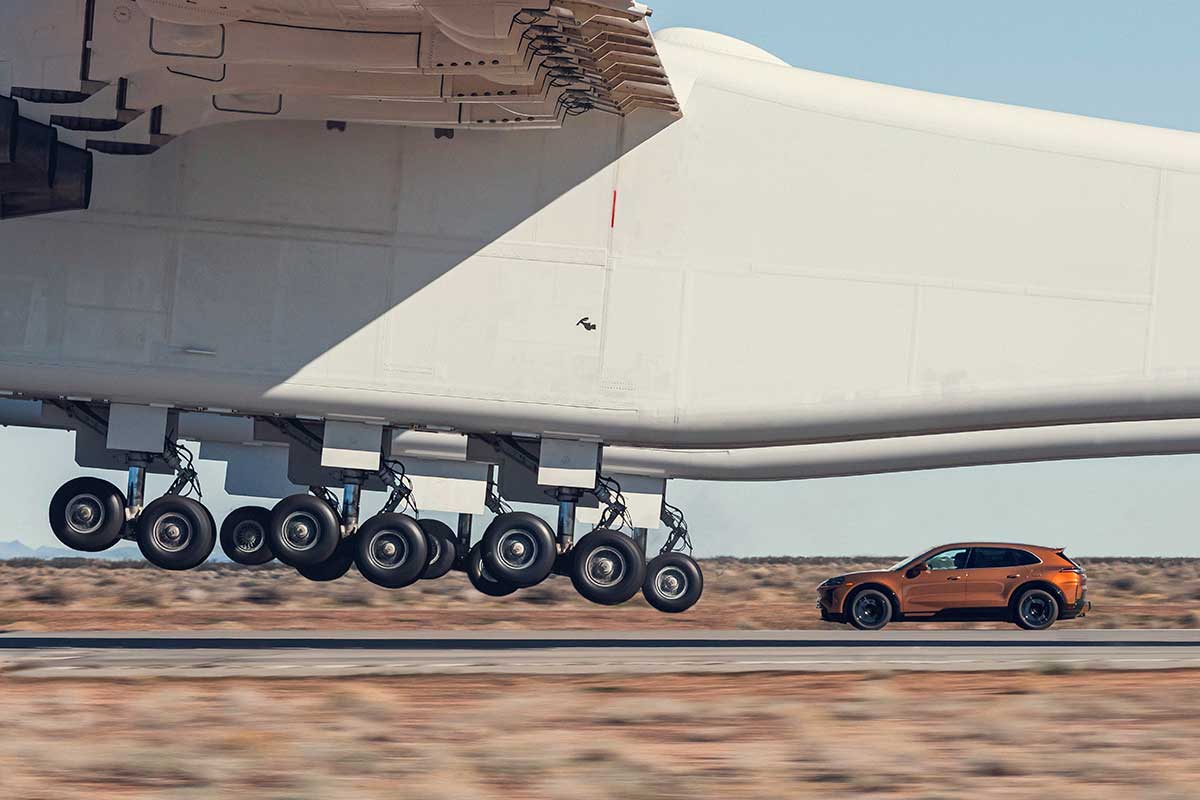
According to Patrick, the sound of the six engines was overwhelming, and he could even feel the turbulence hitting the Cayenne.
Despite this, the Cayenne remained stable, and Roc's speed at the moment of takeoff was reportedly over 170 mph (approximately 274 km/h).
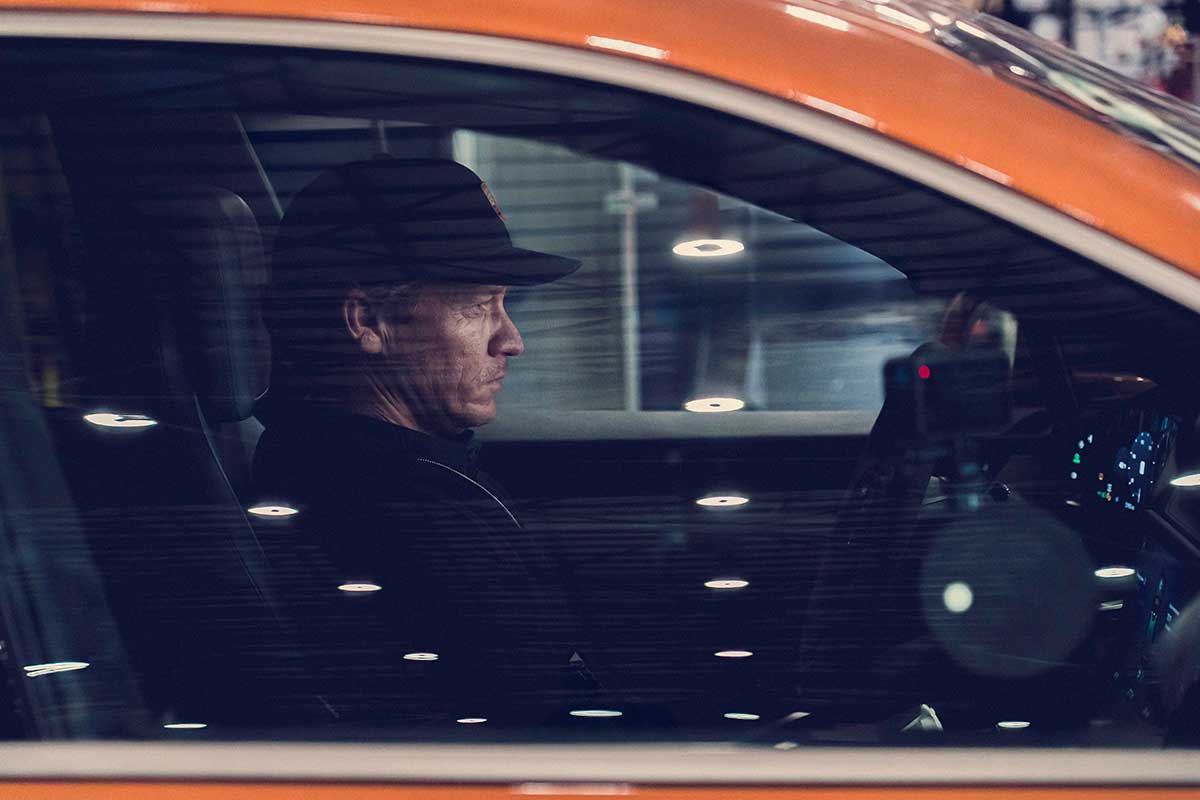
I thought the Cayenne was an SUV...but how can it be driving at 274 km/h under an airplane?
The world's largest airplane was overhead, and the car was speeding along while precisely maintaining its position relative to it. After completing the run, the optional Porsche carbon-ceramic brakes (PCCB) effectively slowed the Cayenne EV down from this extremely high speed.
This challenge showcases not only the acceleration performance of the Cayenne EV, but also its overall capabilities, including high-speed stability and braking performance.
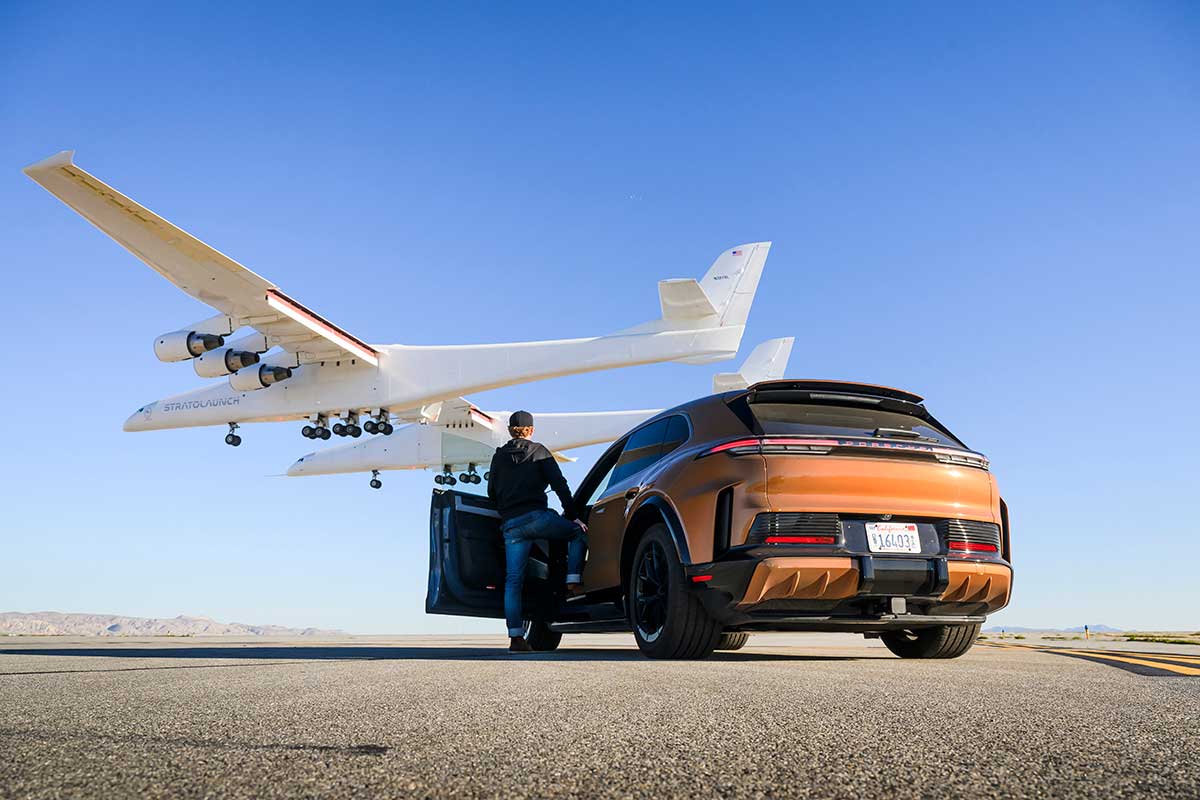
Next, we head towards the Roc as it lands.
Just when you think that's enough, Porsche never stops there, which is one of its slightly inexplicable qualities (and I mean that as a compliment! lol).
Next up was a truly bizarre challenge: "Try to match the Cayenne Turbo EV to the landing Roc."
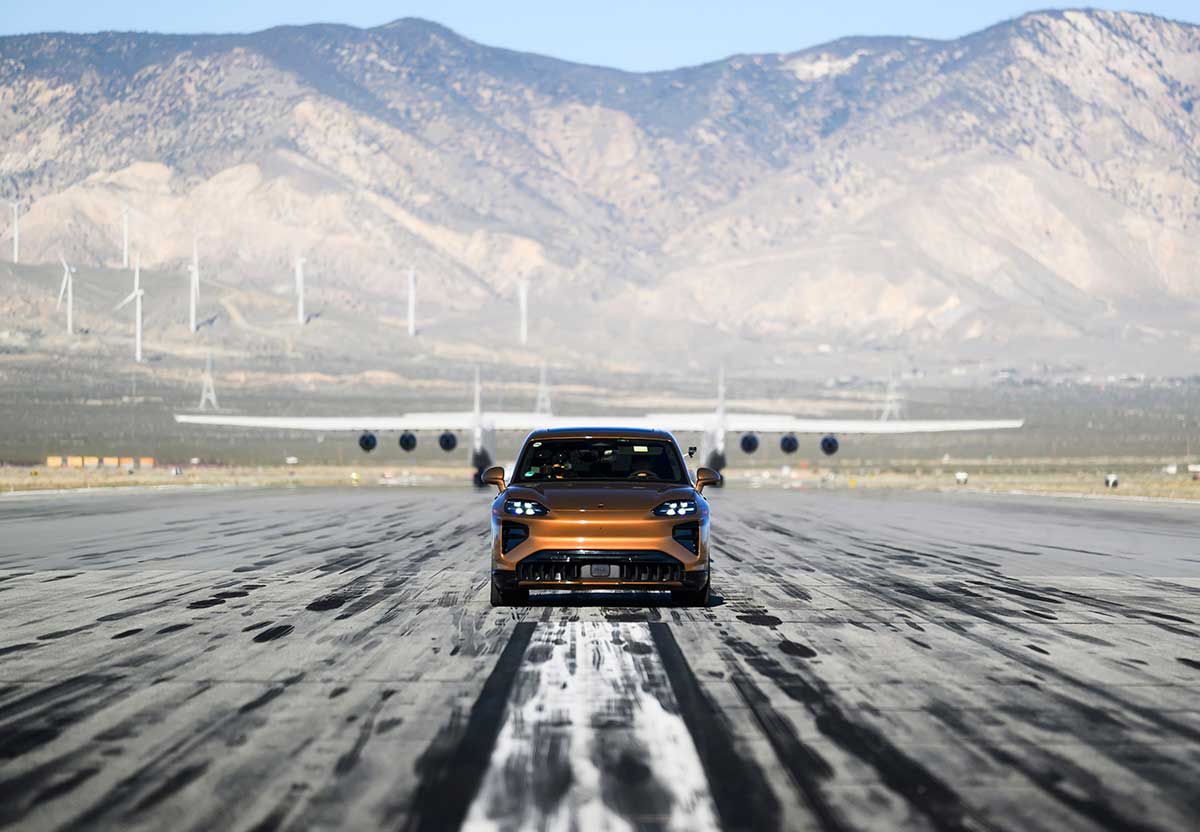
I accelerated the Cayenne to match the timing of ROC's descent onto the runway, entering that "calm space" just behind the landing gear. It was incredible.
However, this method itself is not entirely unprecedented; the U.S. Air Force has apparently been using a chase car to assist Lockheed U-2 reconnaissance aircraft during landing for many years.
That being said, the Roc's wingspan is about three times that of the U-2, so the scale is completely different, and it's just incredible.
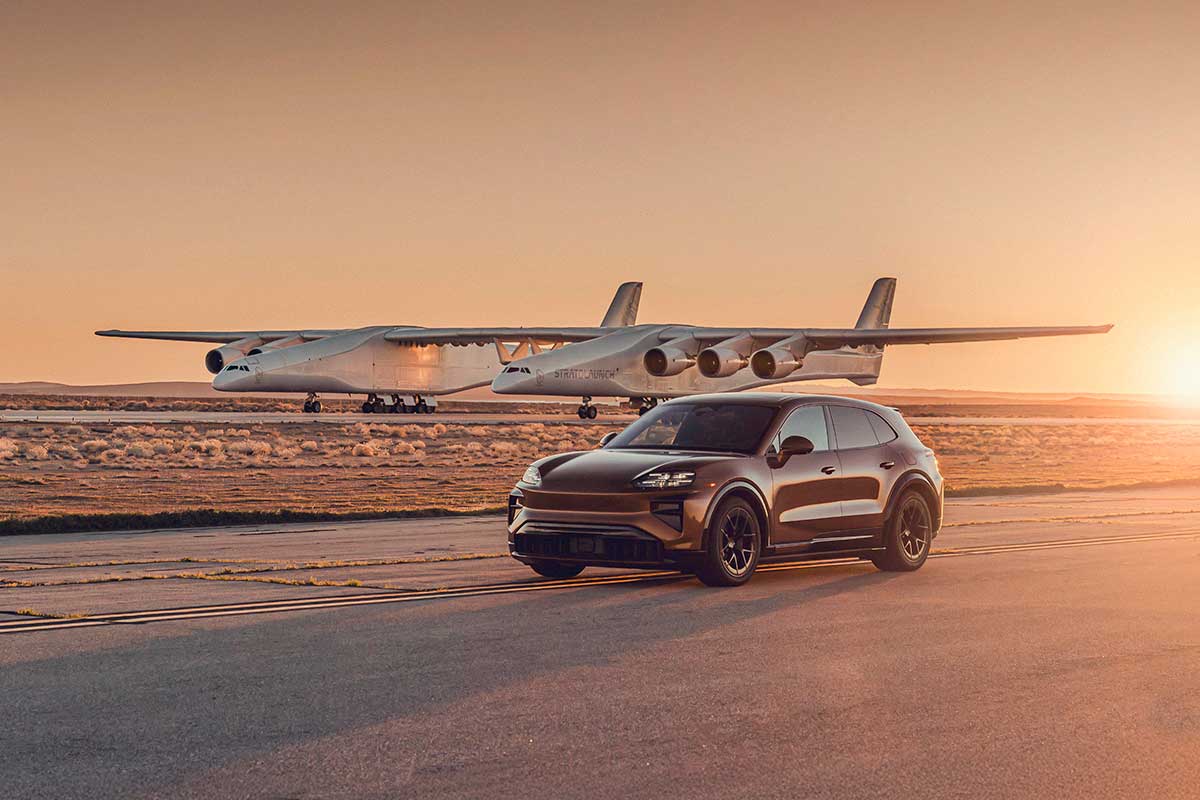
Ultimately, the Cayenne Turbo EV drove under ROC a total of four times: twice during takeoff and twice during landing.
Of course, a coordinator from the FAA (Federal Aviation Administration) was present at the scene of this challenge, and Stratolaunch's crew chiefs were also on board the Cayenne, constantly communicating with Roc's flight crew via radio to coordinate timing and positioning. This shows that the challenge was very meticulously planned.
Even so, it's a challenge that makes you wonder what would happen if the position was even slightly off. I'm really glad that the Cayenne completed the challenge unscathed.
Incidentally, actor Orlando Bloom, who serves as a brand ambassador for Porsche Design, and automotive journalist Matt Watson were also passengers during the test drive.
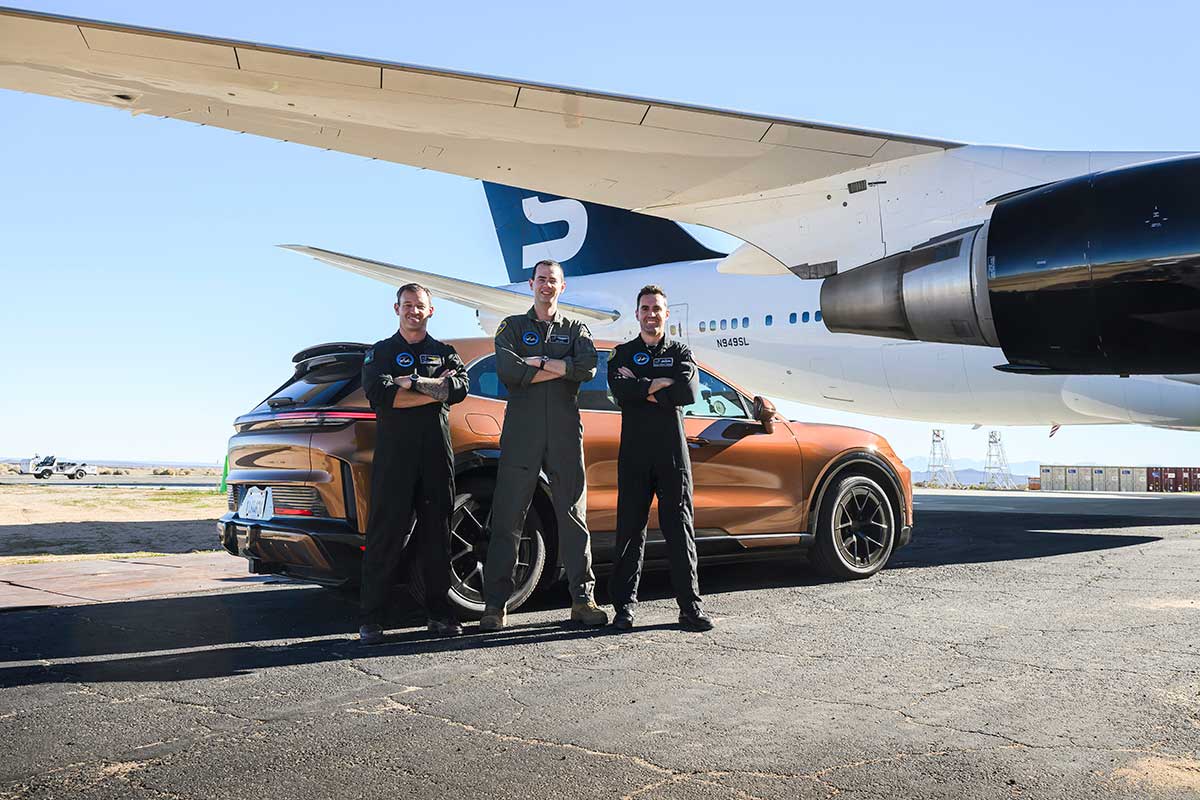
Oh, and also, although it wasn't mentioned in the official announcement, according to the Road & Track article, the Cayenne Turbo EV consumed only 13% of its battery power despite performing four such high-speed runs during this challenge.
That's amazing too.
It's amazing that the Cayenne is currently the most powerful production car in Porsche's history, and to think that Porsche would undertake such an incredible challenge just to confirm how amazing it is—that's just insane (and I mean that as a compliment!).
This is a video of a takeoff challenge, and it's really cool. It's like something out of a movie. It's only 3:07 long, so please check it out ↓
Source:
◆(Official) Precision meets power: Porsche Cayenne Electric accelerates into the eye of a storm
◆Watch a Porsche Cayenne Electric Keep Pace With the World's Largest Flying Plane
I'm Rika, the author of this article. Since I got my hands on a Porsche 911, I've been completely hooked on Porsches and I can't stop loving them, so I started this blog. My favorite cars are the 911 Carrera (2/991), 911 Carrera Cabriolet & 911 Carrera T (1/992), GT3 (1/997) and 718 Cayman GT4 RS.
 English
  Japanese