
Head to Shinojima on the Meitetsu Maritime Sightseeing Boat
I suddenly found myself with some free time, so I thought, "Well, why not go?" and left Tokyo at 3:30 in the morning. The main destination of this trip was Shinojima, which can be reached by high-speed boat or ferry from the tip of the Chita Peninsula in Aichi Prefecture.
I posted this at the beginning of the year (January 6th) as a New Year's greeting.Blog PostI received a comment from you, and I'm ashamed to say that it was through that that I learned about the existence of this island and that Shinojima is an island with a deep connection to Ise Shrine.
So, from the beginning of the year, my husband and I had been talking about how we would like to go to Shinojima next time we have time.
A few days passed after that (lol).
Suddenly we realized, "Maybe we have some free time tomorrow?"
"Okay, let's go then," I thought to myself the evening before, and started planning, leaving Tokyo at 3:30am that day (or the next day, if you prefer).
FirstStopping by the bamboo forest in ChitaAfter enjoying breakfast at a coffee shop, we headed to the Kawa Port Tourist Center.
If you are traveling by car, the most common way to access Shinojima is to take a high-speed ferry from Shizaki Port at the tip of the Chita Peninsula, but this time we decided to take the high-speed ferry from Kawa Port (which is convenient for those traveling by train as it is close to Kawa Station).
[Time required for high-speed ferry]
Shizaki Port → Shinoshima (about 10 minutes)
Kowa Port → Shinojima (approx. 30 minutes)
The time spent on the high-speed boat is shorter if you board from Misaki Port, but it takes about 20 minutes to drive from Kawa Port to Misaki Port, so in the end it takes about 30 minutes to get to Shinojima from either Kawa Port or Misaki Port by land and boat, so the longer time spent on the high-speed boat means you can "take a break."
Our day trips usually start at midnight or early morning, and we continue to drive quite a distance afterwards, so it's important to make plenty of stops to rest.
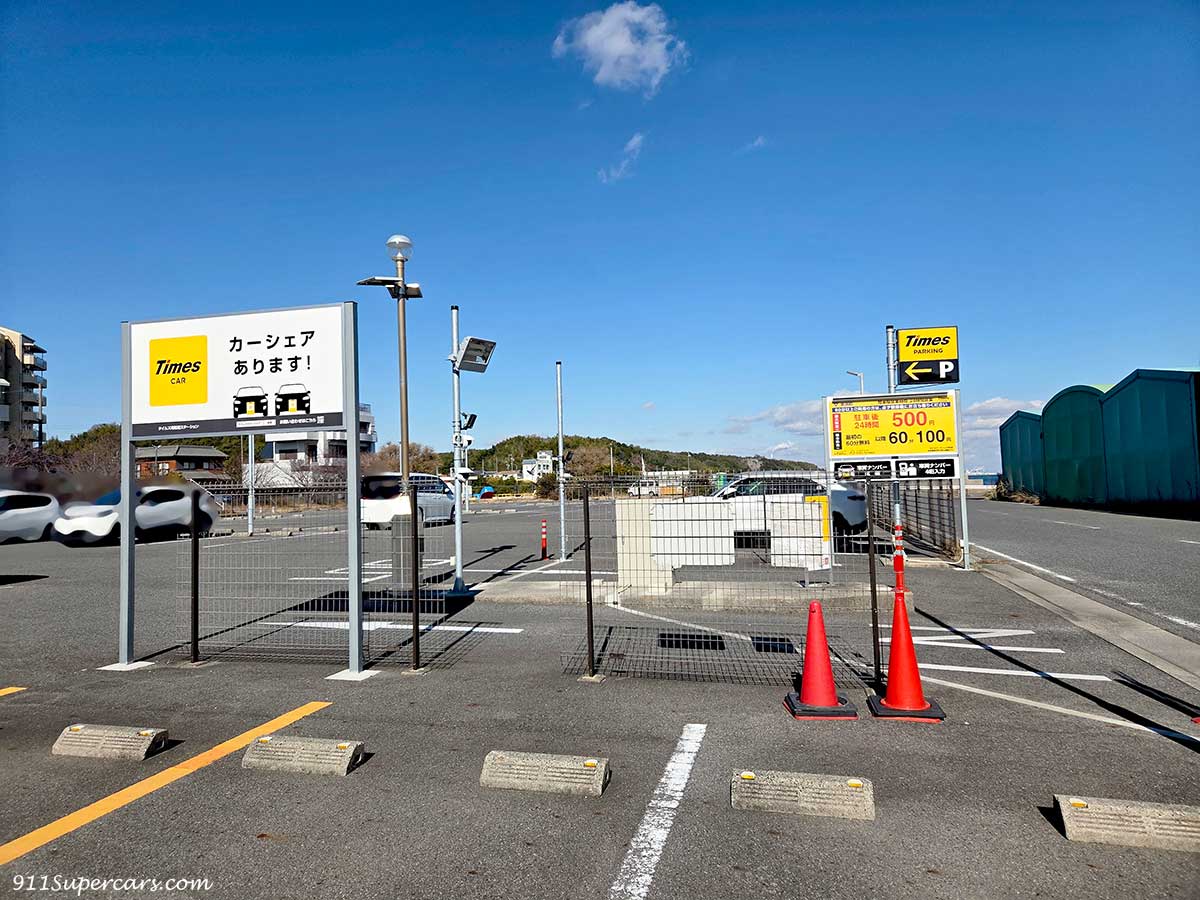
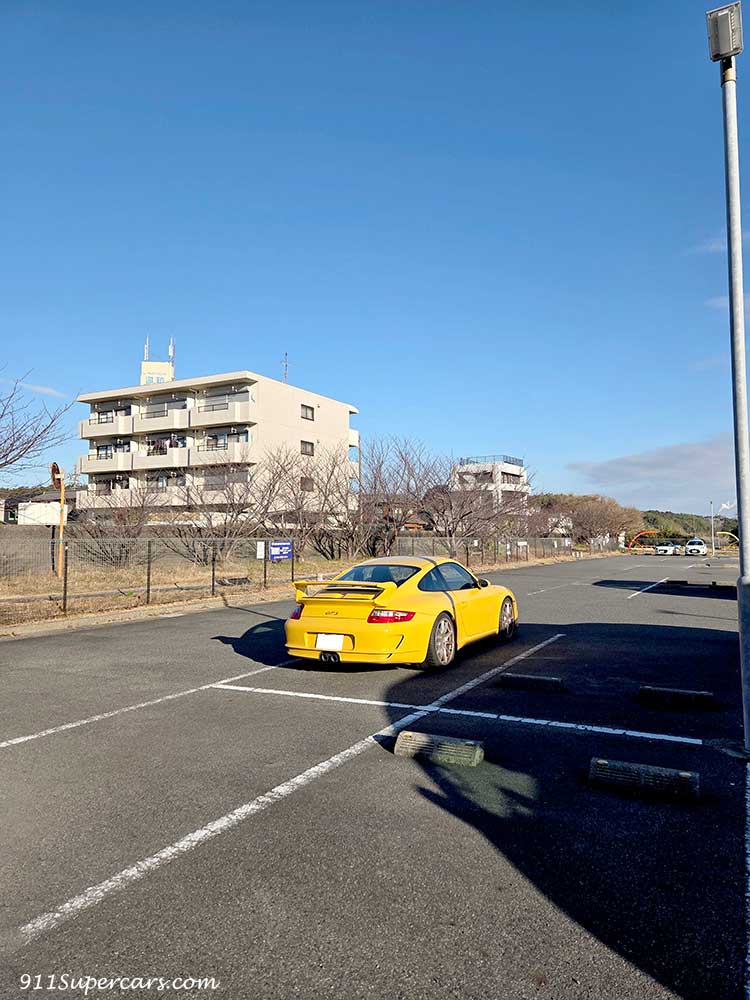
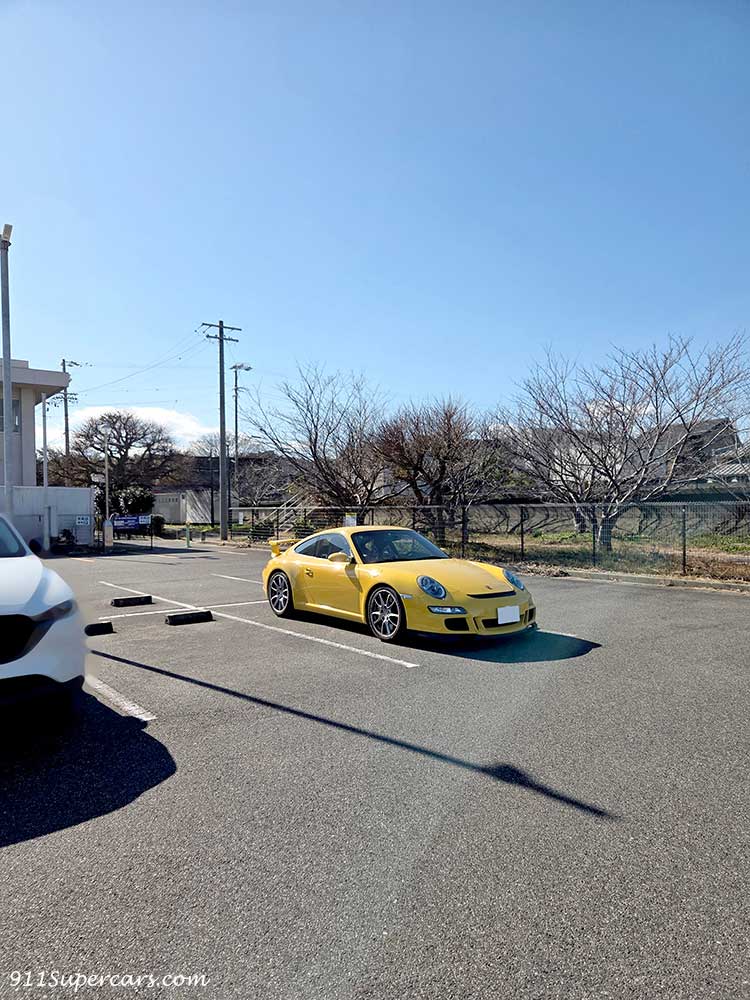
The Kawa Port Tourist Center has a parking lot, and even the GT3 could be parked there without any problems. What's more, it was only 500 yen for 24 hours.
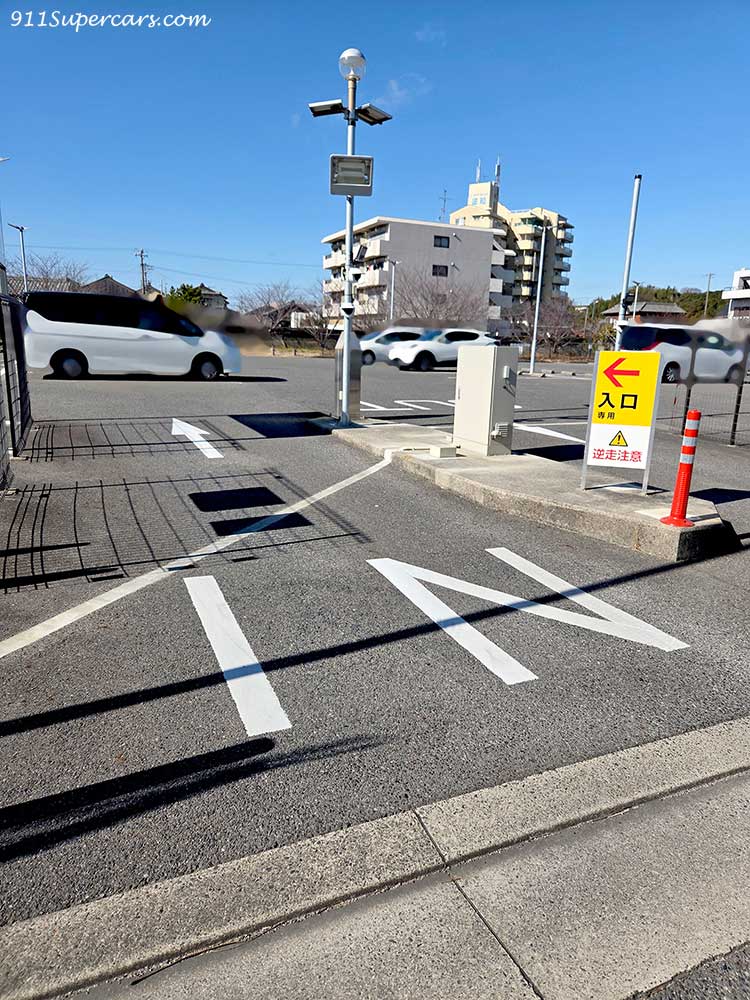
Furthermore, since the system uses a camera to recognize license plates, there are no problems such as "I can't easily get a ticket (from the machine on the right side)" even if you have a left-hand drive car.
By the way, there are two ways to get to Shinojima: by high-speed boat or by ferry, but unless you are a resident of the island or have some other reason, you will need to park your car on the mainland and take the high-speed boat.
Head to Shinojima by high-speed ferry from Kowa Port
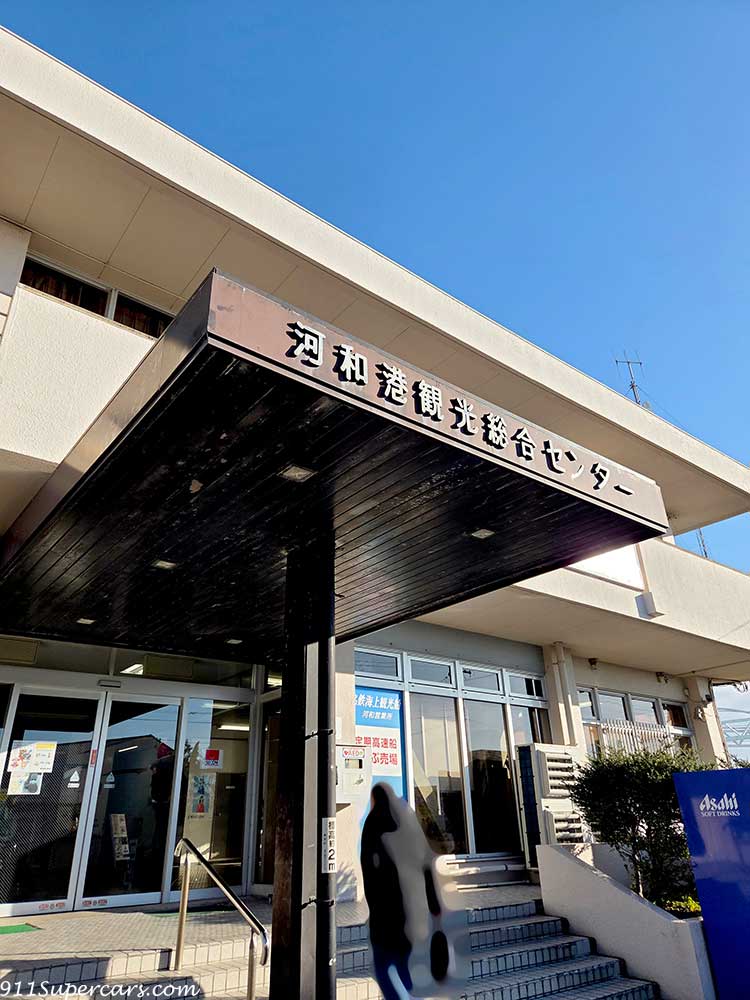
First, purchase a ticket for the high-speed ferry at the tourist center.
The Kawa → Shinojima fare for adults is 1,600 yen one way. If you buy a round trip ticket, it will be 3,070 yen for the round trip, which is a bit cheaper.
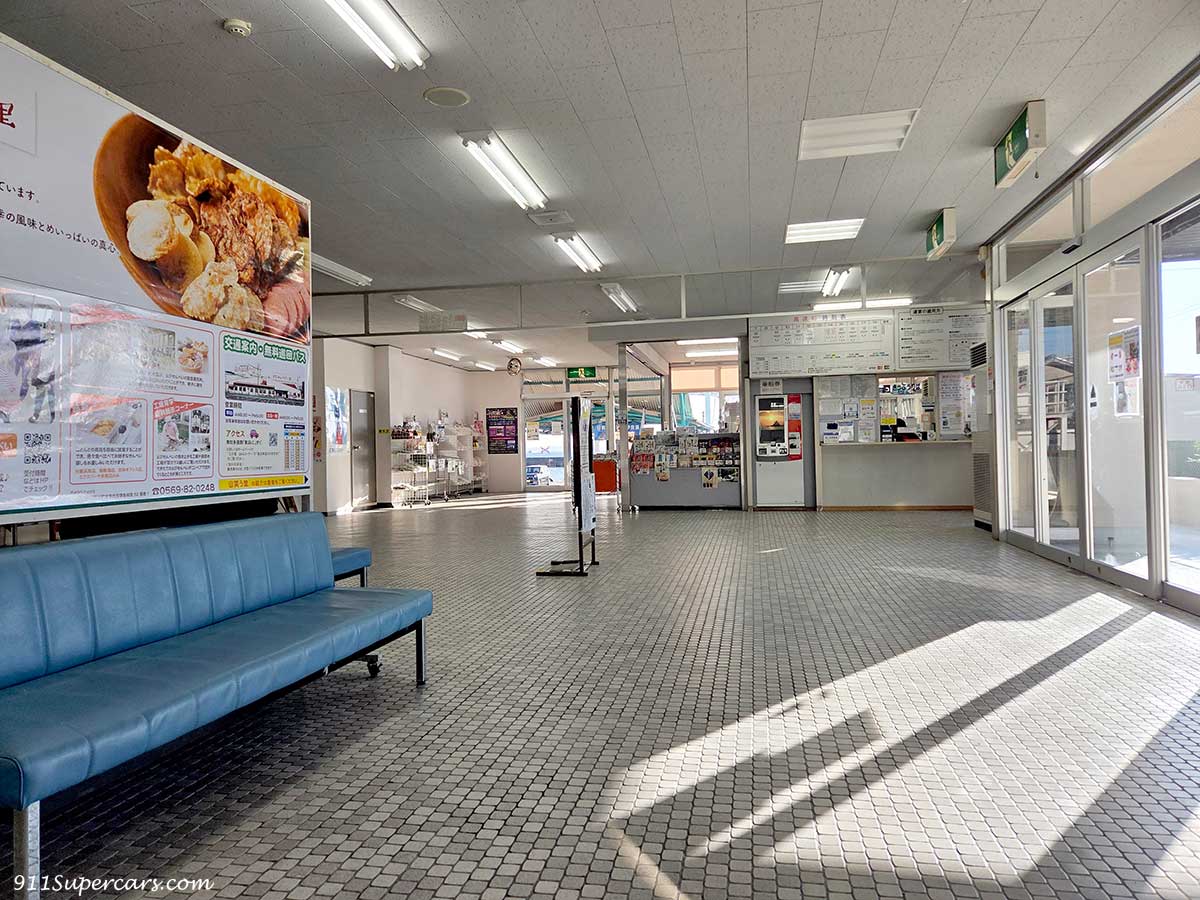
Furthermore, when purchasing a ticket, you did not need to specify the time of your desired high-speed ferry ride, so once you purchased your ticket, all you had to do was wait inside the center before the departure time of the ferry you wanted to board.
We will be taking the high-speed ferry departing at 9:05 and arriving at 9:40.
If you wait inside the center, you will hear an announcement 5 minutes before departure time saying, "Those boarding at 9:05 please come in," and then head to the high-speed ferry terminal (which is right in front of you).
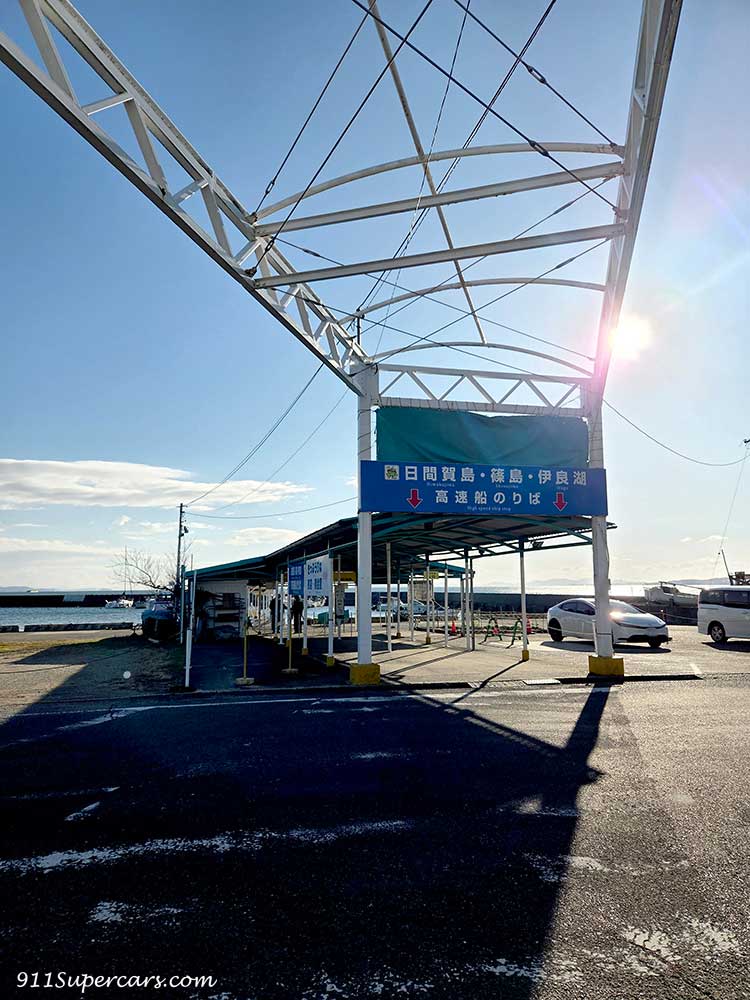
I'm so excited.
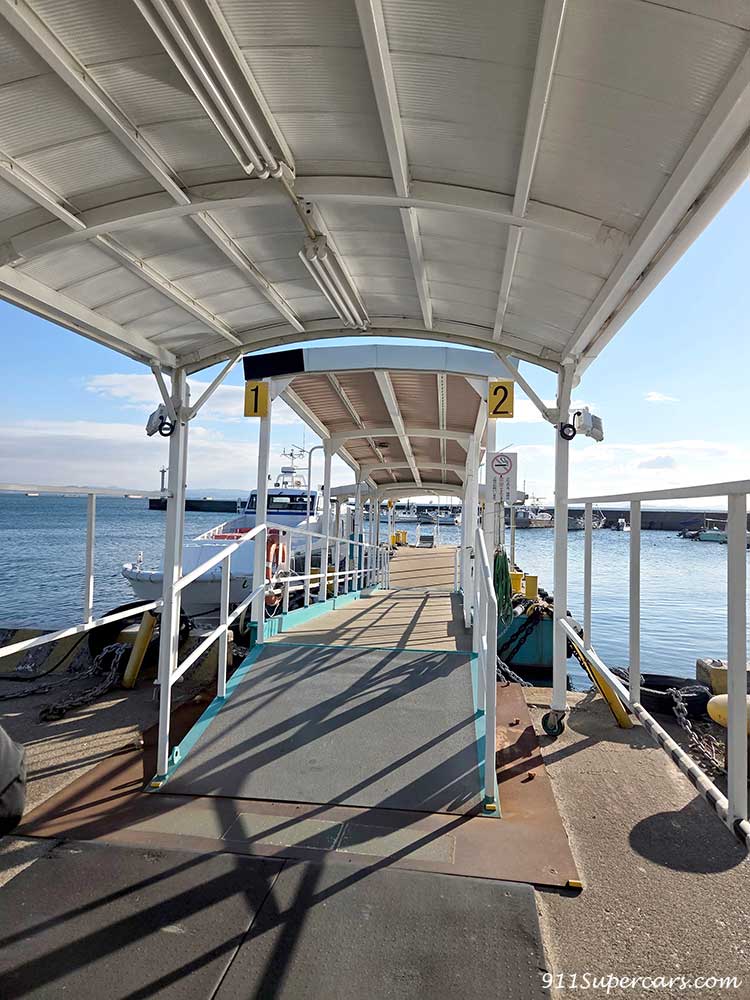
On the way there, we took this high-speed boat called "Shirasagi."
The boat quickly pulled up to the boarding gate, and once the passengers boarded, it quickly backed up and sped away from the Chita Peninsula, accelerating away.
The whole thing made me wonder, "Was I really on a bus?", and I was so impressed by the quick and precise steering (well, maybe that's what you'd call it (lol)) that it was hard to believe it was happening at sea.
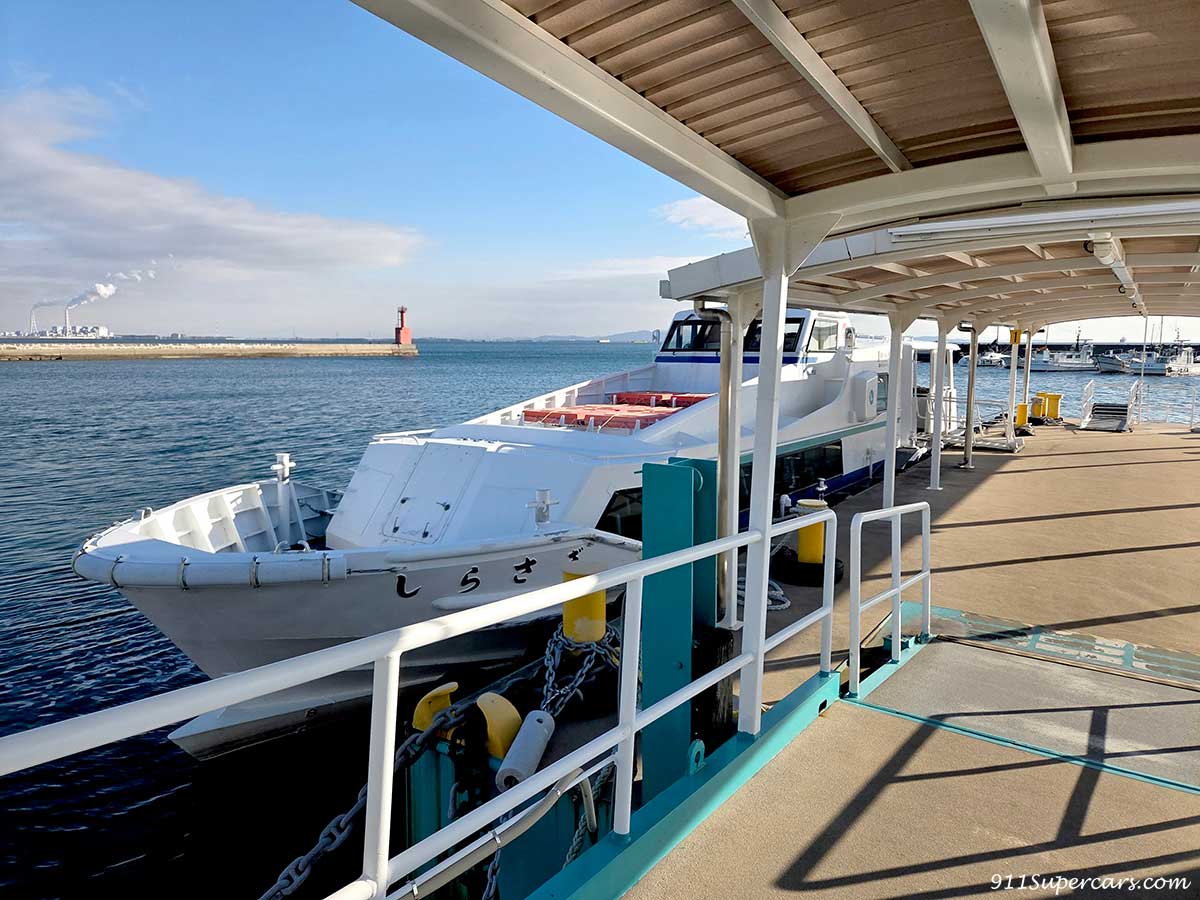
Before you know it, you've arrived at your destination.
Once you get off the high-speed ferry, you'll be at Shinojima!
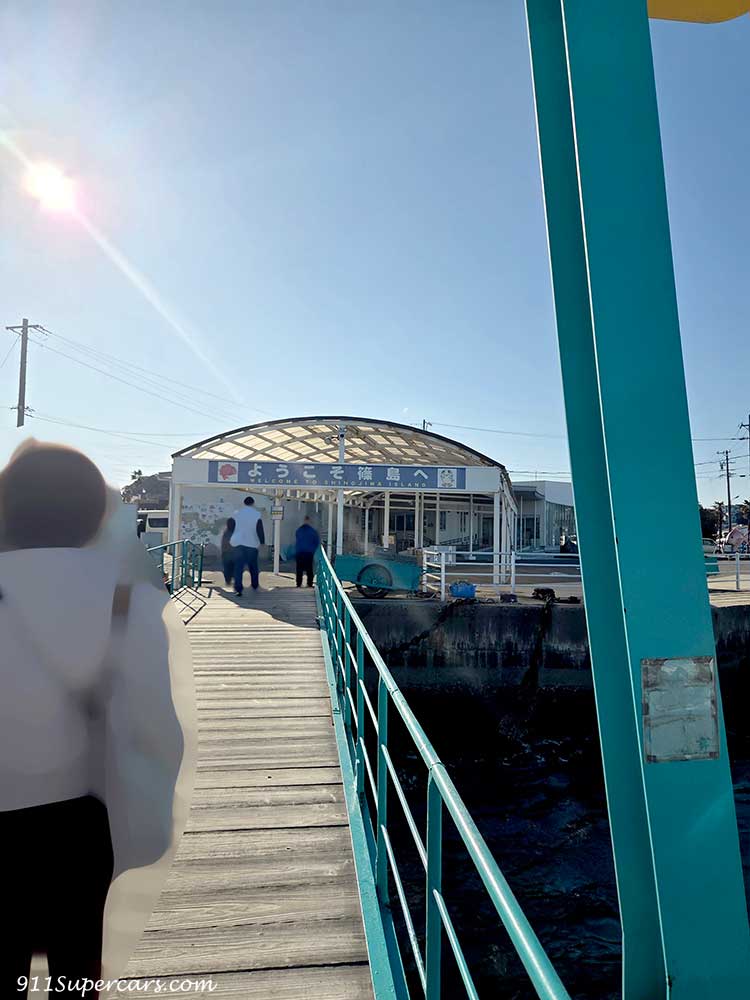
As soon as you get off the boat, you will see a map of the island. Similar maps are also available at the tourist center, so it might be a good idea to pick one up first.
The circumference of Shinojima is just over 8 kilometers, and it takes about 2 hours to walk around it.
I like walking, so I thought, "If I go to Shinojima, I'll take a leisurely walk and see various things." However, even though I "had some free time" that day, I actually had to get back to Tokyo before 7pm, so taking into account the traffic jams on the way back, I only had about 1.5 hours to spend on Shinojima.
We arrived at Shinojima by high-speed ferry at 9:40 and wanted to catch the return ferry at 11:05...it was quite a tight schedule.
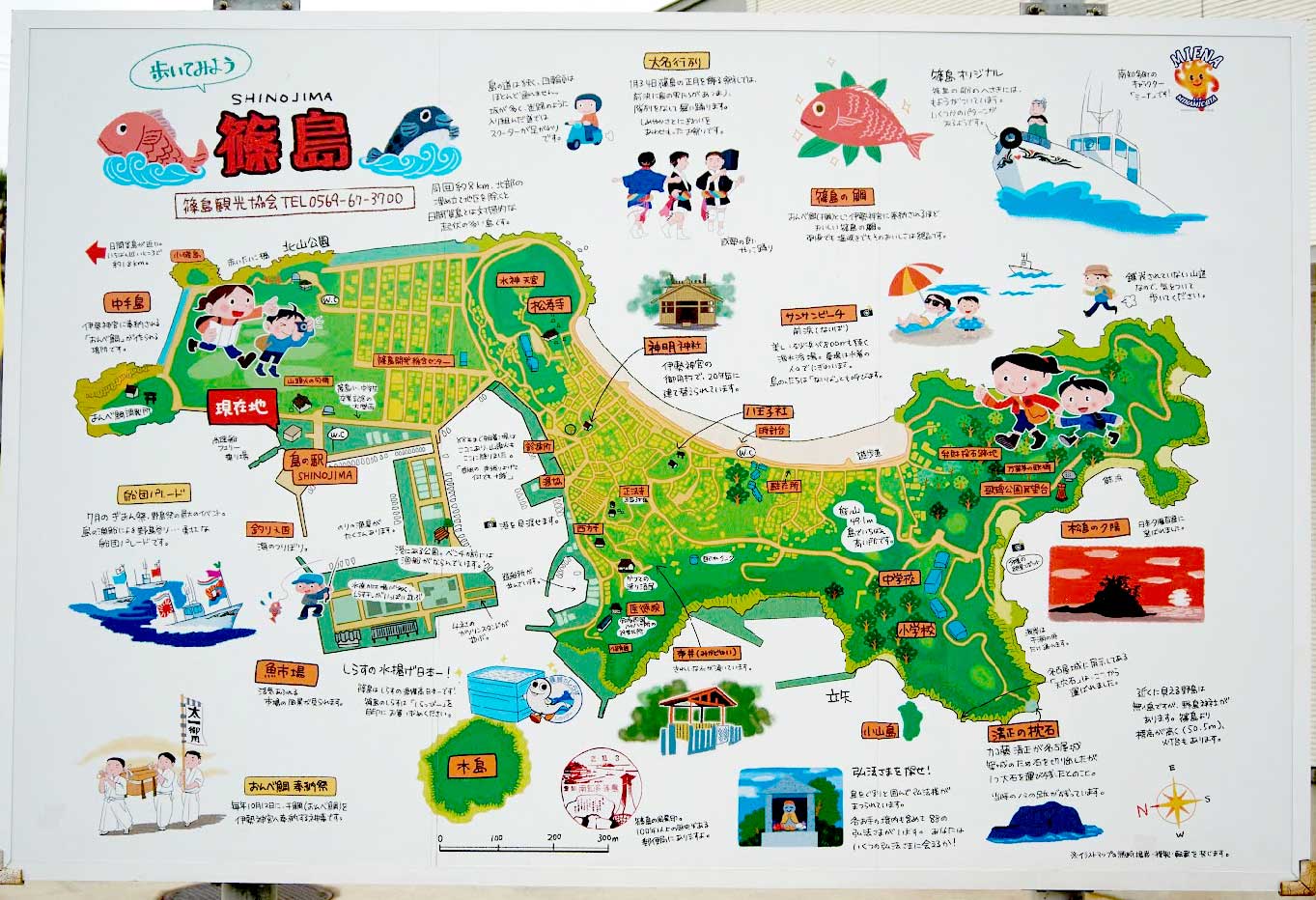
I had checked Shinojima's website beforehand and it seemed like they had an all-you-can-eat oysters option, so I was excited and thought, "I'll definitely have all-you-can-eat oysters for lunch!" However, since I only had a little over an hour to spend on the island (considering that I needed to get to the boat dock with plenty of time to spare), I decided to give up on the oysters this time.
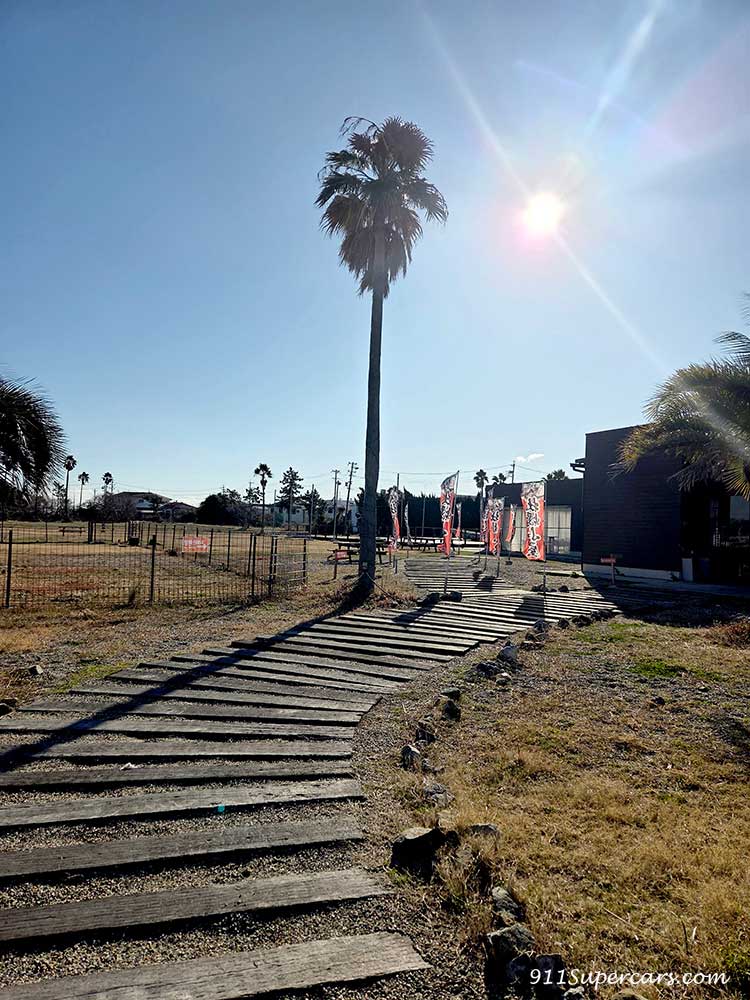
Rent a tuk-tuk in Shinojima
Since we didn't have much time to explore the island, we decided to rent a tuk-tuk and tour the island.
The rental fee is 8,000 yen for 2 hours.Shinojima Dew TerraceYou can rent one right next to the high-speed ferry terminal. By the way, the all-you-can-eat oyster restaurant is also located in the same place.
This is my first time riding a tuk-tuk.
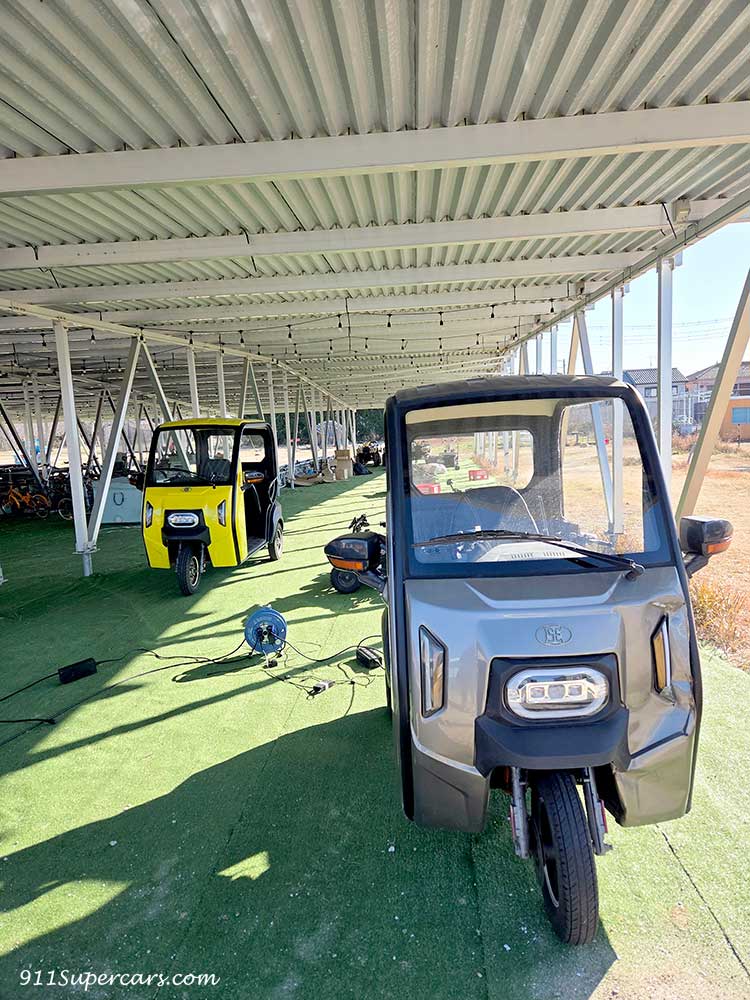
Apparently you can drive one if you have a regular driver's license, so all you need to do is show your license, sign a disclaimer, and make the payment, and you can rent one right away.
The staff at the shop will explain how to ride (operate) the bike in an easy-to-understand manner, so if you normally drive a car or ride a motorcycle, I think you'll have no problems.
The floor mats(?) of the tuk-tuk I borrowed looked like BMWs for some reason (lol)
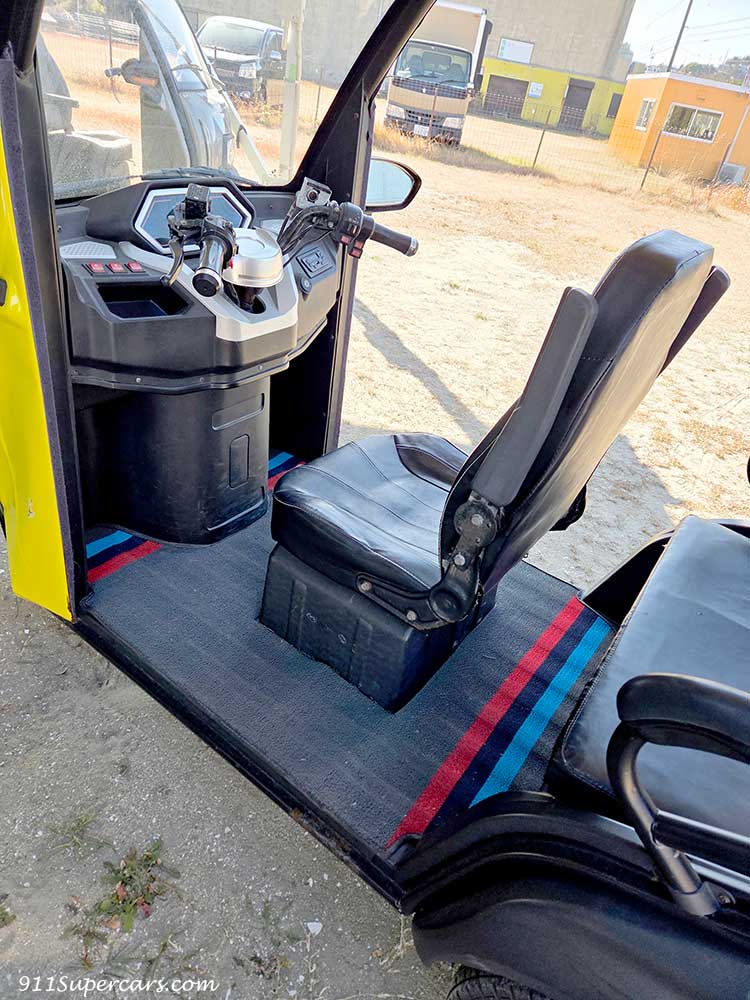
By the way, this tuk-tuk is electric.
It seats three people, with the driver sitting in the front and the second or two or three people sitting in the back seat.
However, since it does not have much power, "if you feel like the tuk-tuk is struggling to go uphill, making a whirring noise, everyone except the driver should get out and walk," and further, "on the steepest, most difficult uphill sections, anyone who gets out should push the vehicle from behind."
The tuk-tuk's weak look is cute (lol).
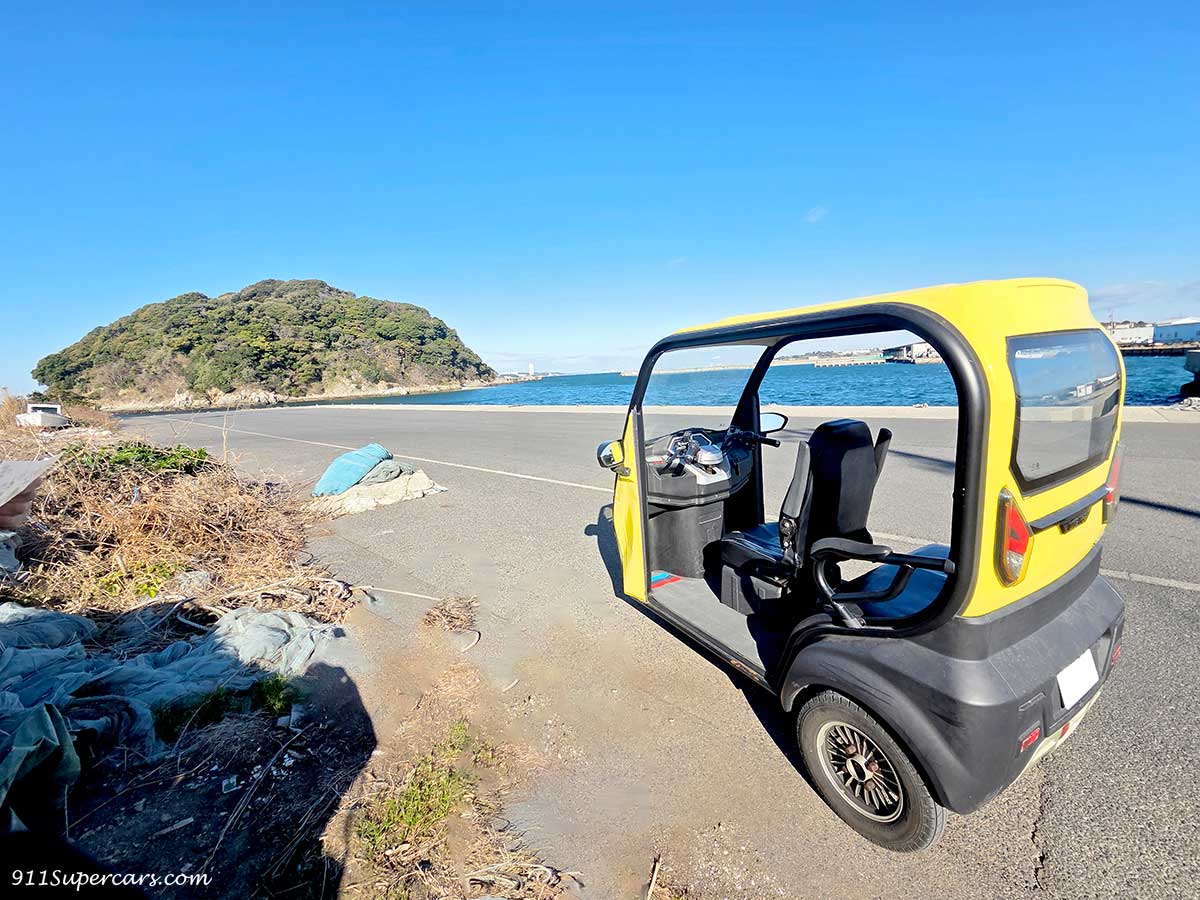
It was really nice to ride around Shinojima in a tuk-tuk on a clear day while looking out at the beautiful ocean... but the downside was that the left and right sides of the vehicle were open, so it was "cold" in the mid-January temperatures!!
Although I was still able to cope with the cold because I was wearing a coat, I didn't have any gloves, so my exposed hands were exposed to the cold wind as I ran and it was really cold.
If you are going during the cold season, I think you will enjoy it more if you take measures to protect yourself from the cold. We were constantly saying "It's so cold" in the shade, and "It's so warm" when we came out into the sunlight, and we managed to get around by doing so.
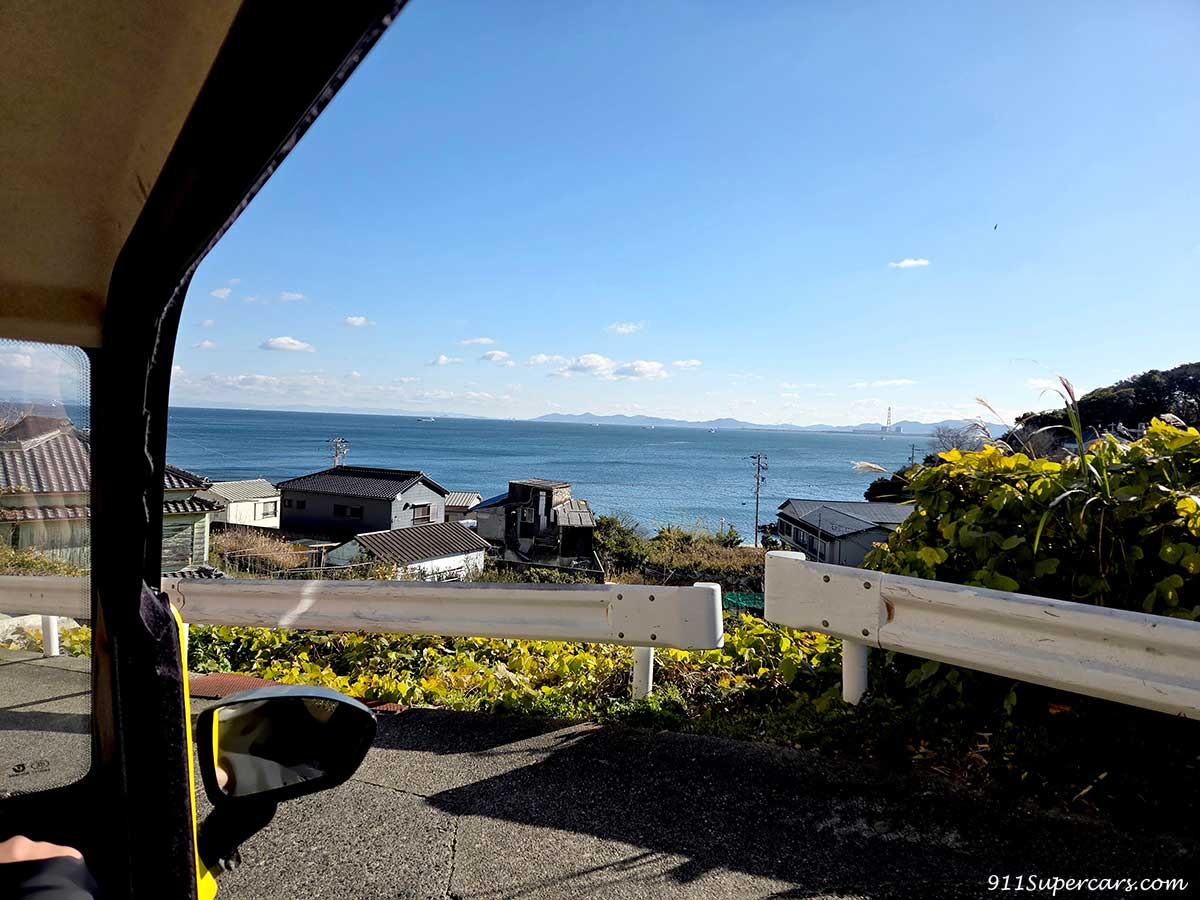
Waikiki on Shinojima
The beach on Shinojima called Sansan Beach is known as "Shinojima's Waikiki," I think. If you look at the beach from the spot where this photo was taken, it looks just like Waikiki Beach.
The beach is curved and you can even see Diamond Head in the distance!
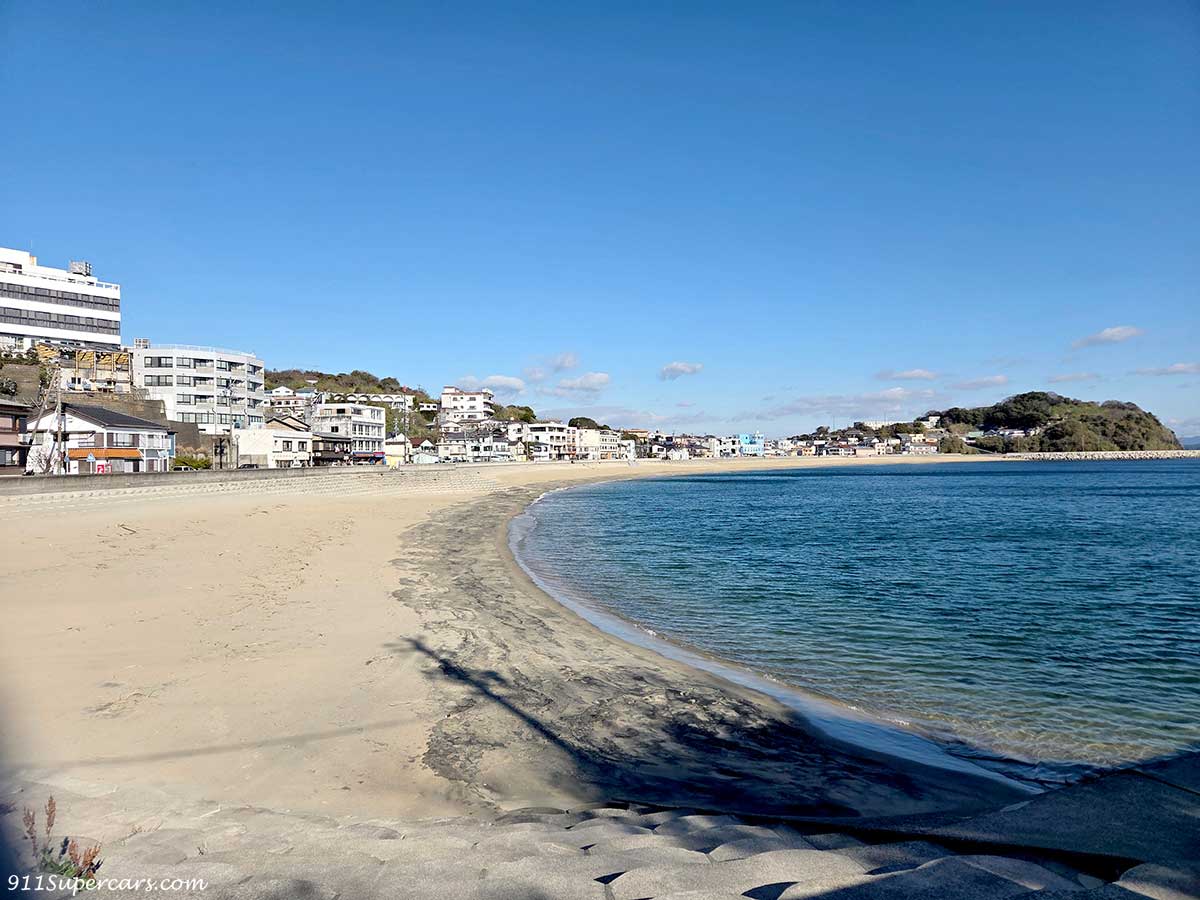
As instructed by the shop staff, I started out by going around the island counterclockwise, but the island was smaller than I expected, and before I knew it, I had already ended up on the other side of the island instead of the route I had intended, so I ended up going around it twice.
You will also be going through narrow roads, and in some places you will be warned, "This is an animal trail, so please turn back and do not go further in the tuk-tuk." *You can park your car in a place where you won't cause any trouble and continue sightseeing on foot from there.
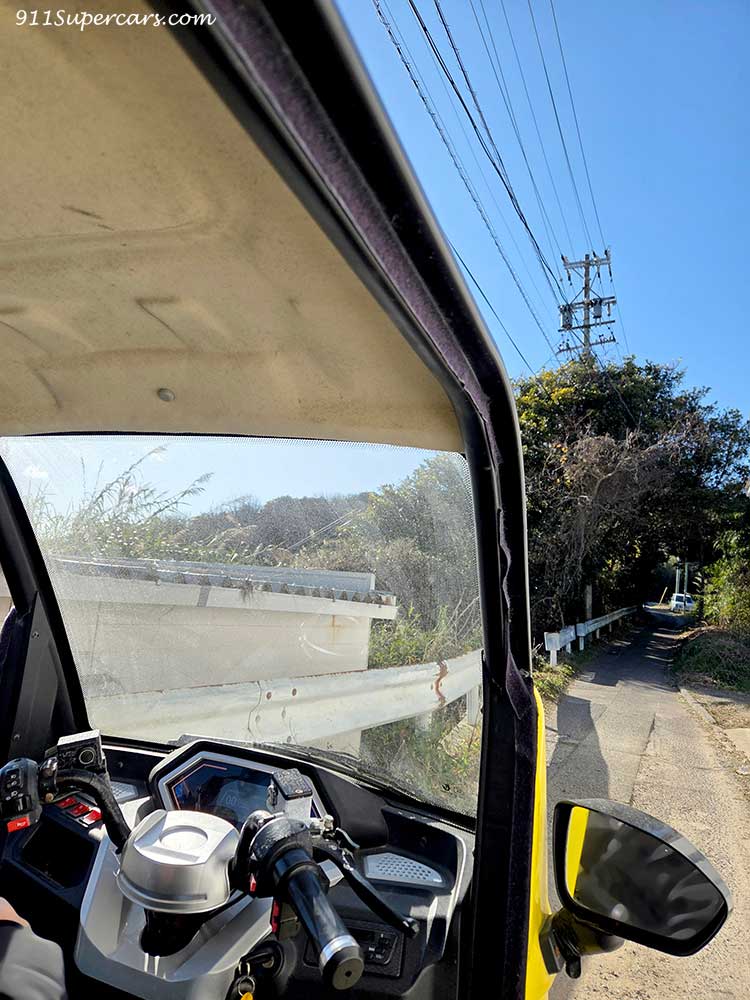
On hills, I get out of the back seat and follow the tuk-tuk on foot. Uphill. Pant. Phew.
On the toughest slopes, I was in the driver's seat and my husband pushed the car from behind. However, even then, I couldn't feel the tuk-tuk's power and I wondered, "Huh? Is it possible that this car is running on the strength of my being pushed alone?", so much so that I just had to be pushed up the hill.
What a sense of adventure.
There were many difficult things, such as having to get off the bus and walk up hills, having to push the tuk-tuk in some places, having my hair messed up by the wind, and being cold from the strong winds blowing from both sides, but it was also a lot of fun.
It sounds terrible when I put it into words, sorry (lol).
In reality, this wasn't the case at all, and the whole experience felt like an attraction, so I enjoyed an experience that I wouldn't normally have.
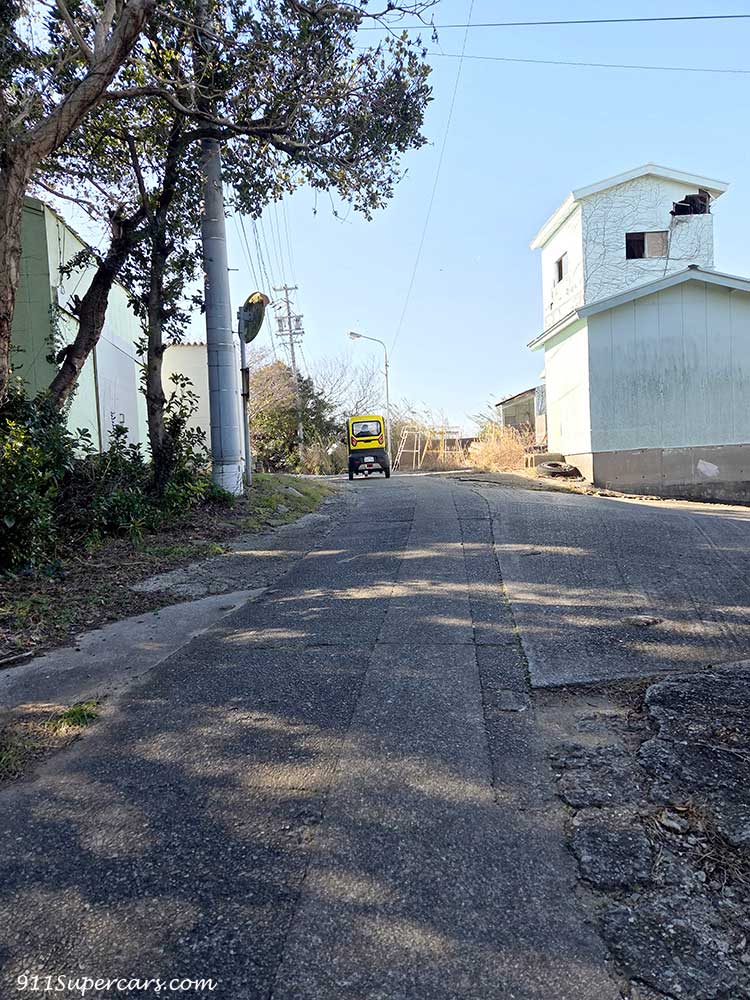
Thanks to the tuk-tuk, we were able to get around to the places we wanted to visit in a time-efficient manner.
Oh yes, the speed limit on the island, including cars, is about 25 kilometers per hour, so even tuk-tuks should be driven at less than 25 kilometers per hour.
However, when I actually rode it, I felt that about 20 km/h was sufficient, and it seemed scary to go too fast (risk of falling, etc.).
Even when I was sitting in the back seat, I felt scared if I wasn't holding on to something, so I made sure to hold on to something. I was also nervous that I might fall off on a curve (which could be dangerous for small children).
Ise Shrine and Shinojima
Now, I would like to introduce three places I wanted to visit on Shinojima.
Shinojima has a deep connection to Ise Shrine, so the story begins with Ise Shrine.
At Ise Grand Shrine, there is an event called "Shikinen Sengu" that takes place once every 20 years, in which all the shrine buildings and costumes are replaced with new ones and the gods are moved to the new shrine. This Shikinen Sengu has been going on since last year, in 2025.
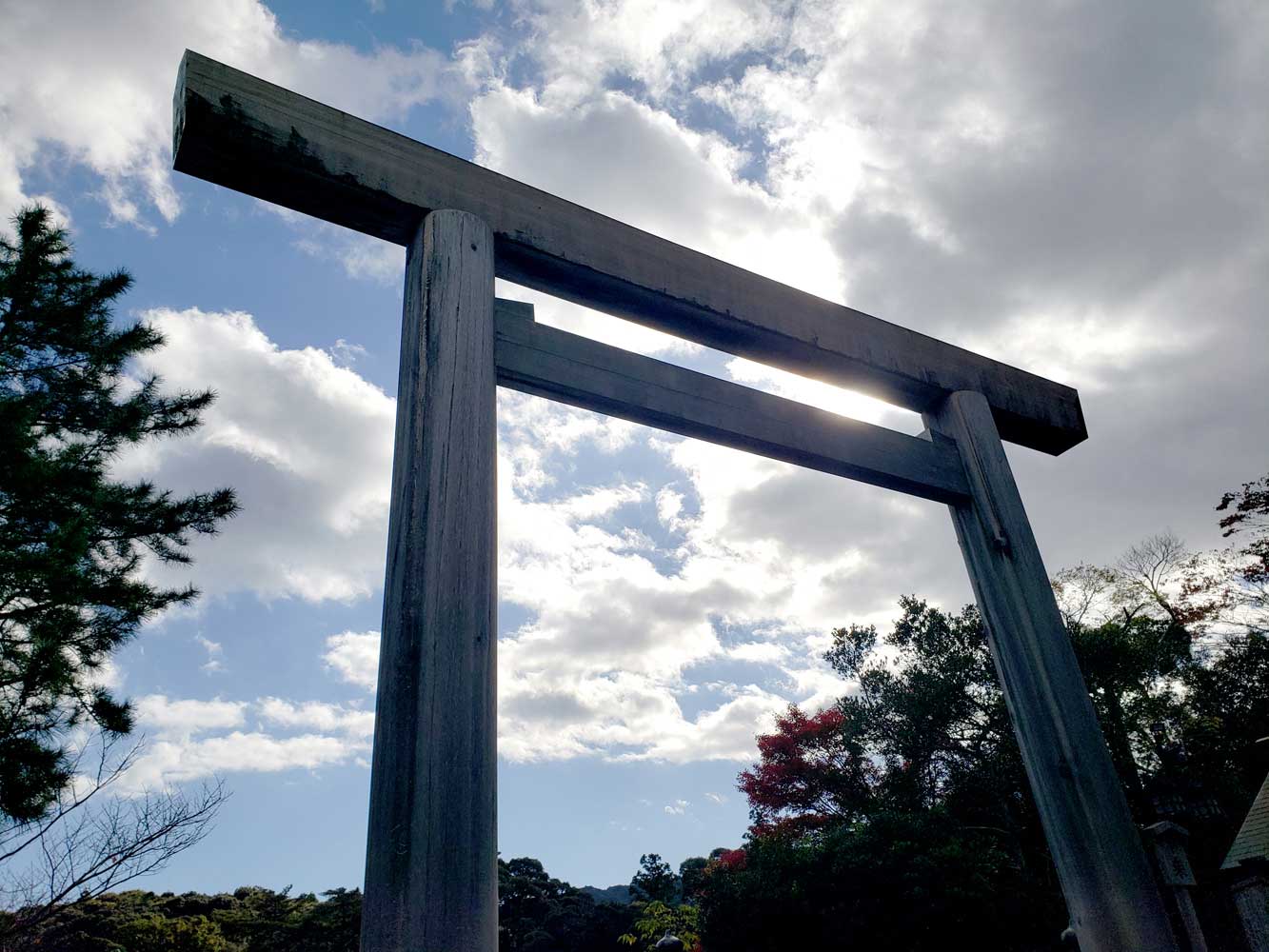
I had a vague understanding that the carpenters would be building a new shrine, but I had never really thought about what would happen to the existing shrine once the new shrine was built.
I just vaguely wondered if it would end up being demolished.
But the answer came to me when I came to Shinojima.
Shinmei Shrine
The old timbers from Ise Grand Shrine will be moved to Shinmei Shrine on the island, which means that Shinmei Shrine will also be rebuilt every 20 years.
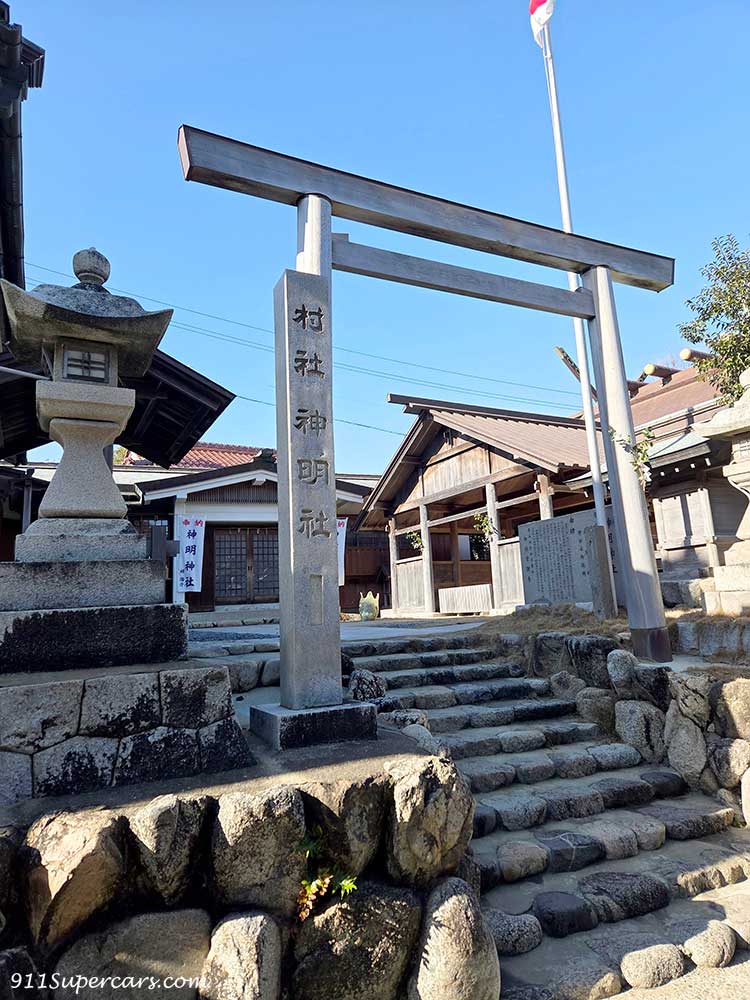
Rather than using new wood, old wood that had been used at Ise Shrine for the previous 20 years will be used.
Hachioji Shrine
What was even more surprising was that what will happen to the old wood from Shinmei Shrine, which is renovated every 20 years using old wood from Ise Grand Shrine?It will then be moved to Hachioji Shrine, also located on Shinojima, and remade there.
Therefore, Hachioji Shrine will be renovated using old materials inherited from Ise Shrine 40 years ago.
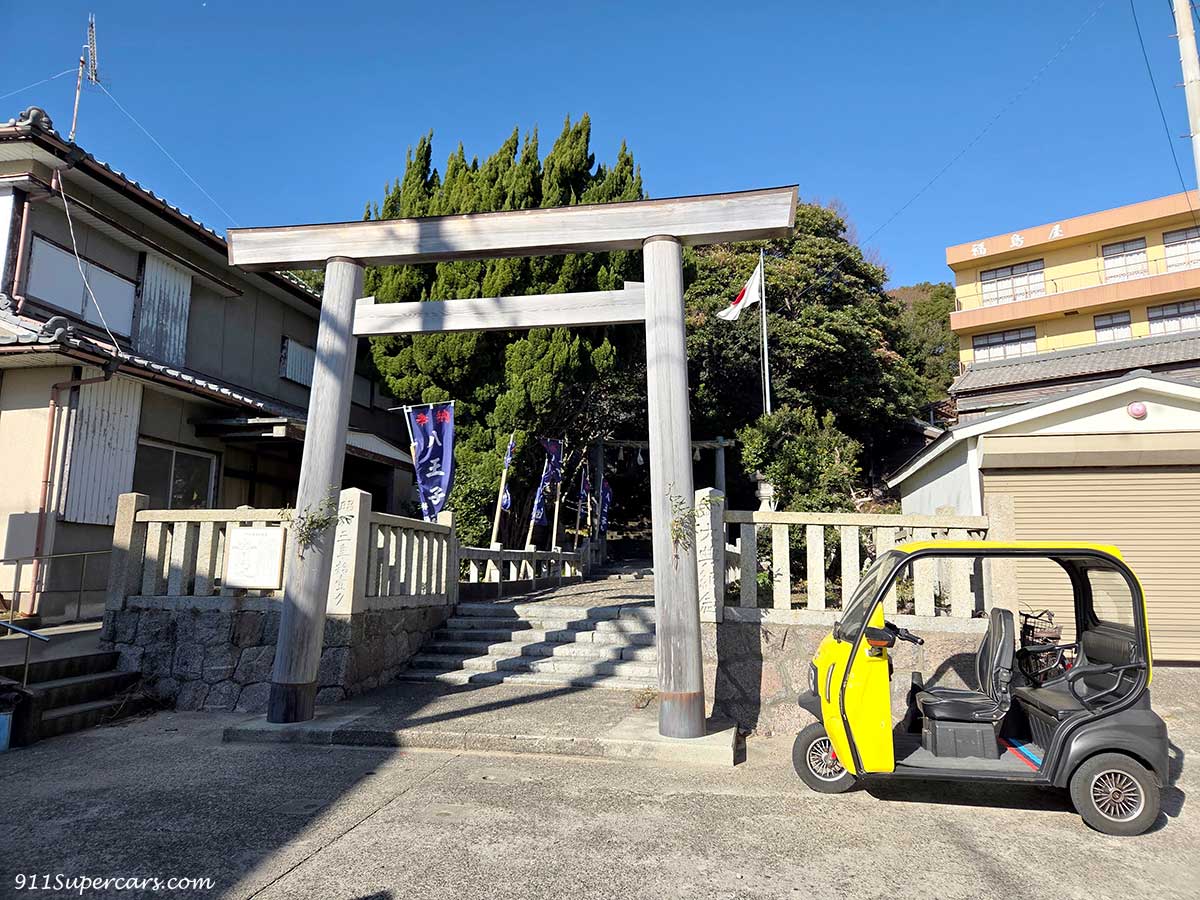
What was even more surprising was that the delivery was still ongoing.
Once the Hachioji Shrine is renovated, the old timber from it will be transformed into smaller shrines scattered around the island.
great.
Ise Shrine (renewed every 20 years)
↓
Old cypress wood from Ise Shrine is sent to Shinmei Shrine (after 20 years at Ise Shrine)
↓
Old timber from Shinmei Shrine is sent to Hachioji Shrine (40 years old timber from Ise Shrine and Shinmei Shrine)
↓
The old timber from Hachioji Shrine is donated to shrines scattered around the island (60 years old timber from Ise Shrine, Shinmei Shrine, and Hachioji Shrine)
It will be used and treasured in this way for the next 60 years.
I see. I didn't know that it had been passed down in this way for a long period of time, not just every 20 years as part of the Shikinen Sengu.
I was deeply moved by something I had no idea about.
Mitsaku Dried Sea Bream Adjustment Center (Onniehidaichiseijo)
The last place I wanted to visit was the Onniehidaichoseijo (Onniehidaichoseijo).
However, this is private property of Ise Shrine, so you cannot enter. However, when you get close to the private property, there is an explanation there.
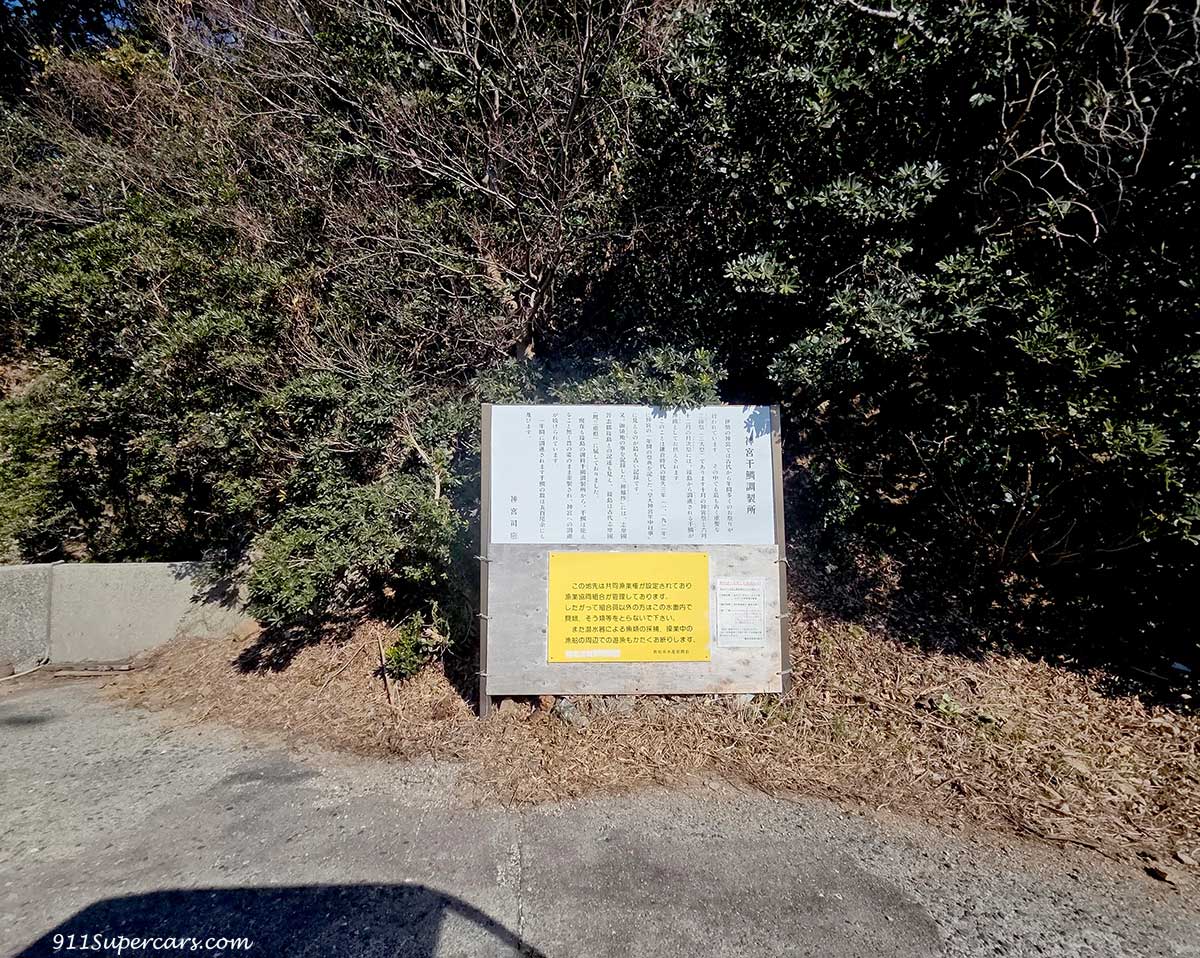
What exactly is going on here? Apparently, this is where "Gohei-dai" (sea bream) is made.
So, what is Onbedai? I didn't know this either, but apparently, salted sea bream (dried sea bream) made on Shinojima Island has always been offered at important religious ceremonies at Ise Shrine since the Kamakura period.
The dried sea bream made in this area of Shinojima is called Goheidai, and 508 Goheidai are offered to Ise Shrine every year.
Apparently, when the offering is made, six fishing boats fly flags that read "Taichi Goyo" and enter the port of Ise to make the offering. From what I heard, I also learned that this is a festival with incredible tradition and history (over 1,000 years old!).
By the way, "Taichi" is said to refer to Amaterasu Omikami, who is enshrined at Ise Shrine.
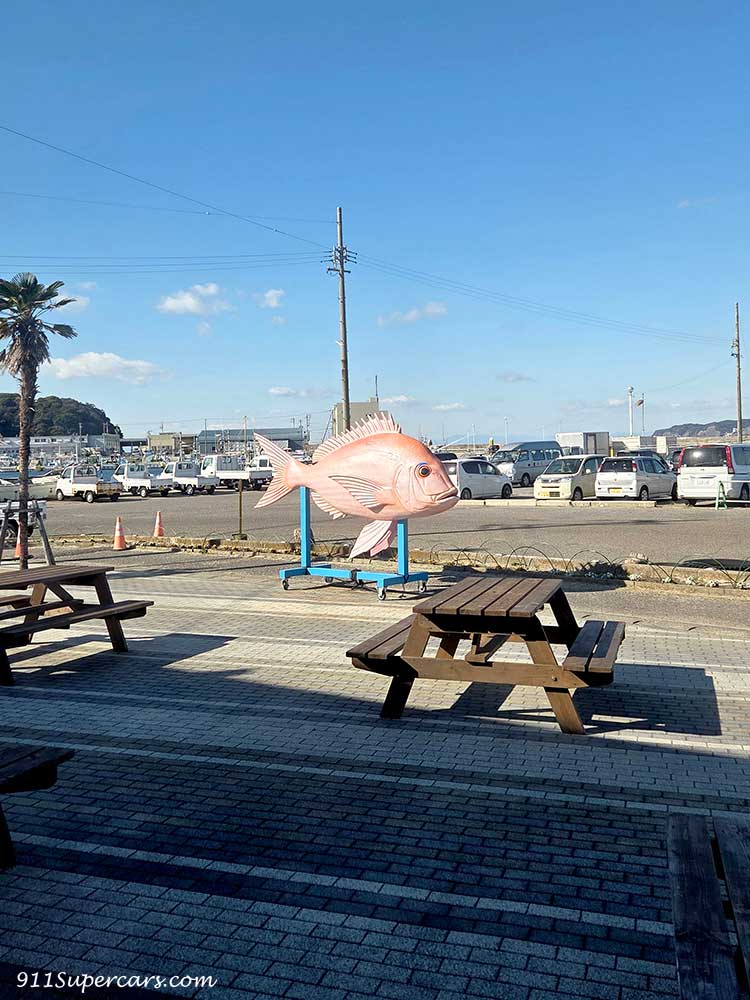
Every year, 508 sea bream must be caught (apparently there is a size requirement), and they must be dried, so I imagine it must be extremely difficult to prepare all of this every year.
I learned many things I hadn't known before, and when I thought about how I was able to come to Shinojima and possibly come into contact with the cypress trees that must have existed as Ise Shrine decades ago at Shinmei Shrine and Hachioji Shrine, I felt a different kind of history than I felt at Ise Shrine, but still, it was a very cleansing feeling.
Feeling very refreshed, it was time to return the tuk-tuk.
This is also the last time to see the beautiful ocean scenery from Shinojima. I looked out at the sea stretching out before me…
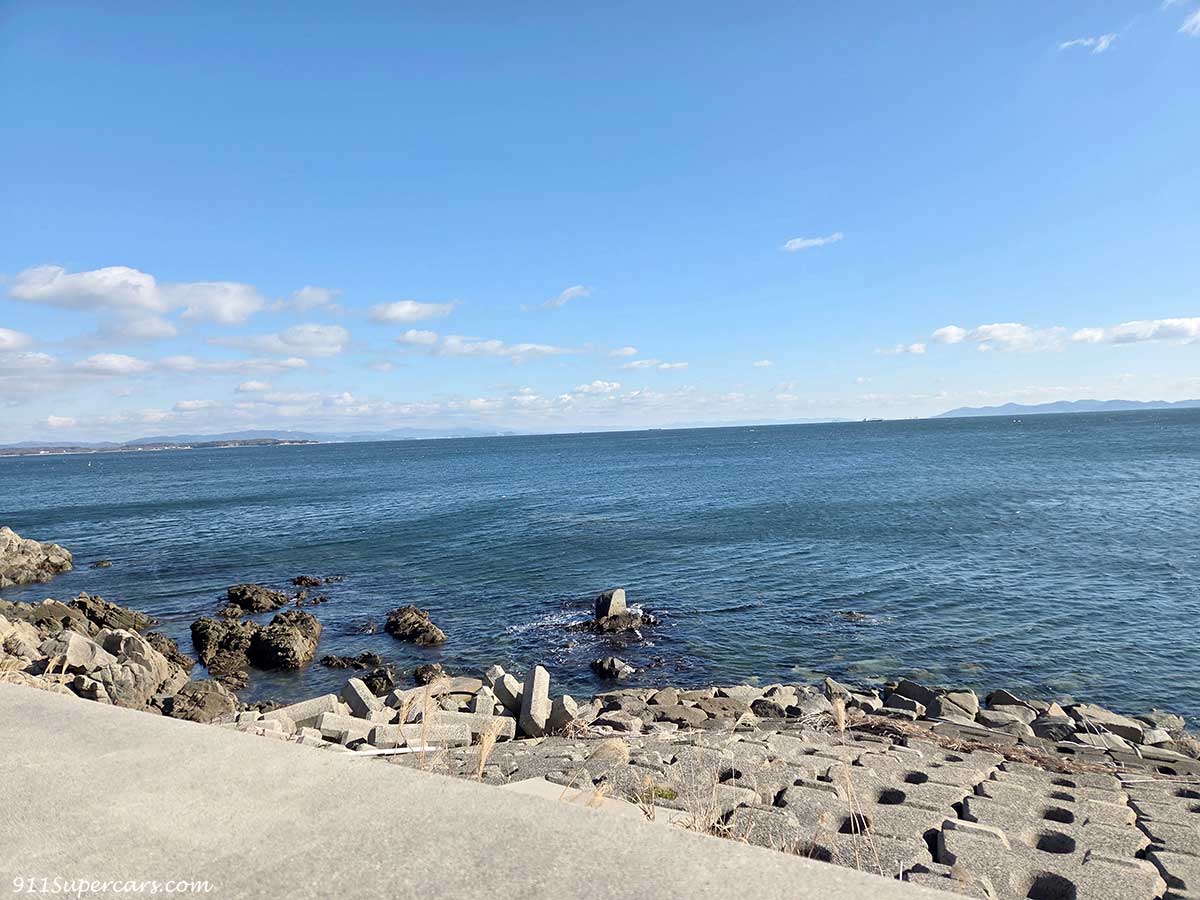
Ah, the beautiful deep blue sea stretches as far as the eye can see.
I looked from left to right and was instantly cleansed by the thought, "It's beautiful."
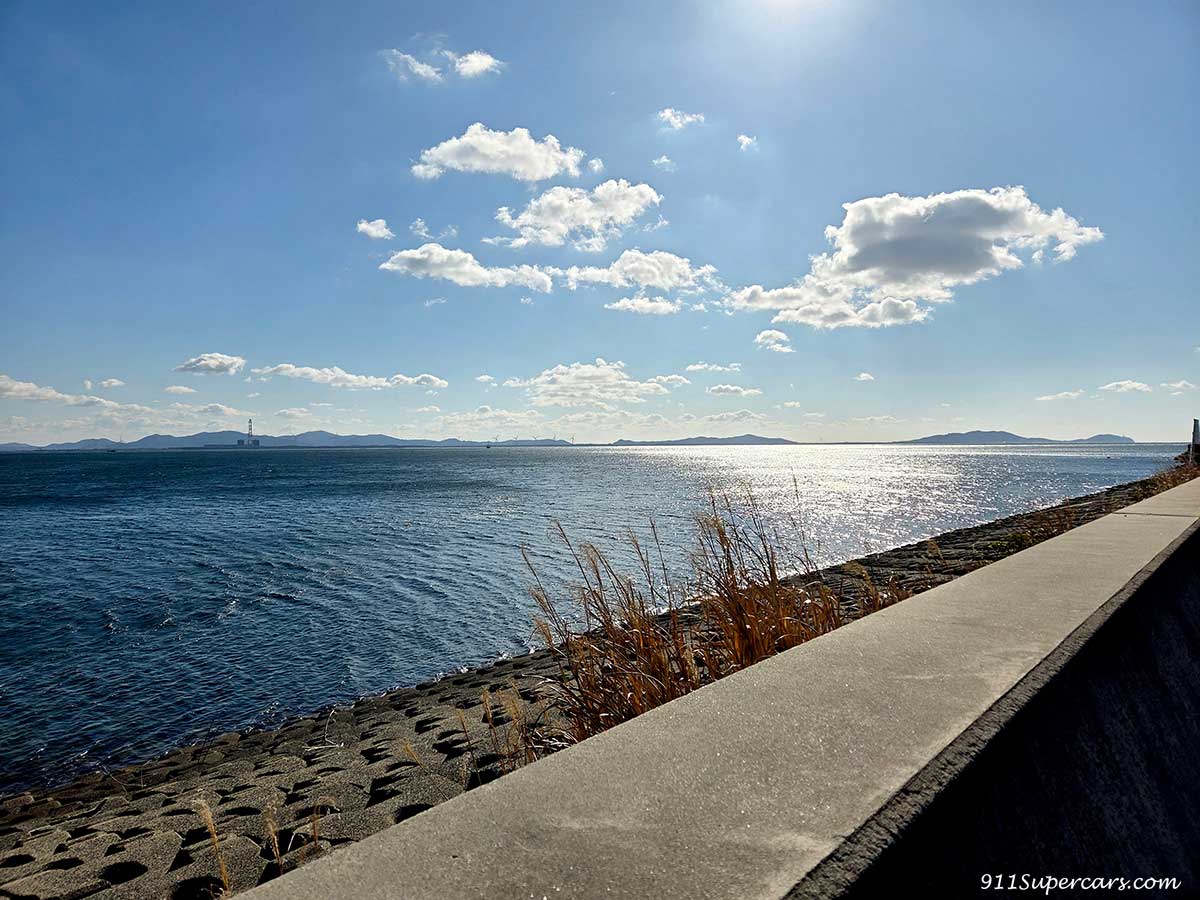
"Hmm, isn't that a lighthouse?"
The thing you can see just where the red arrow is pointing ↓
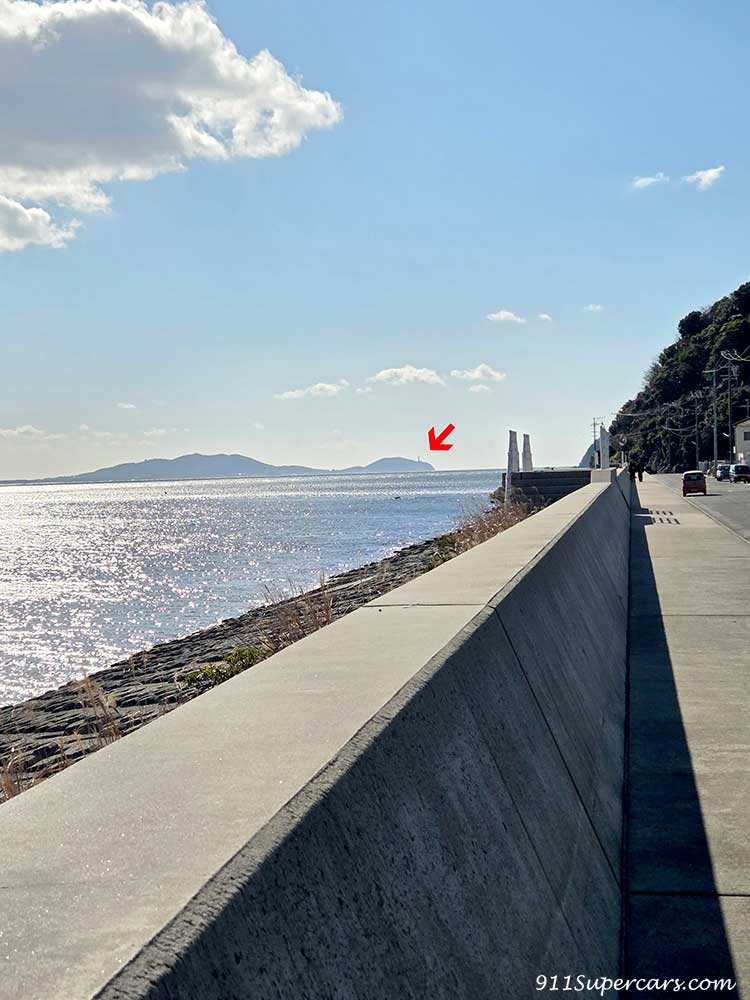
Oh, right. That's the lighthouse.
And it's not just any lighthouse. That's the Cape Irago Lighthouse!
Yes, Irago Cape Lighthouse is a lighthouse located right next to the Ise Bay Marine Traffic Center.
That was before IWhen I was tracking the ship carrying the Porsche I ordered entering Toyohashi Port with a live camera,The location where the live camera used in this video is installed!
Ahhhh, my Porsche geek fever is suddenly rising at a time like this.
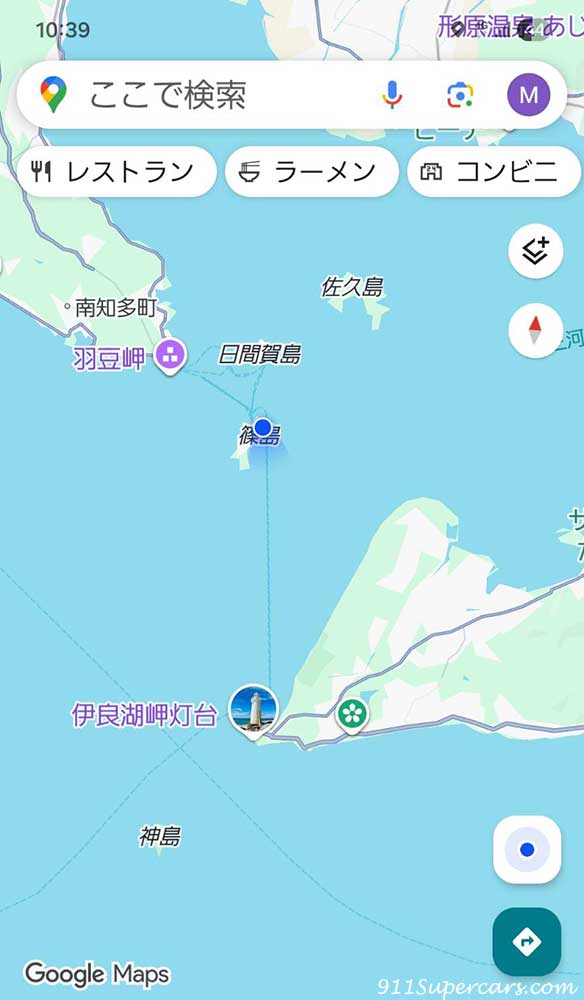
My desires and worldly desires came out and I thought, "Oh, how nostalgic! I remember chasing that ship carrying a Porsche!" (laughs).
Where did my purified and cleansed soul go? My heart was quickly overwritten by worldly desires.
By the way, this is a screenshot of a ship I captured through the live camera some time ago. Could it be Shinojima that you can see in the background? ↓
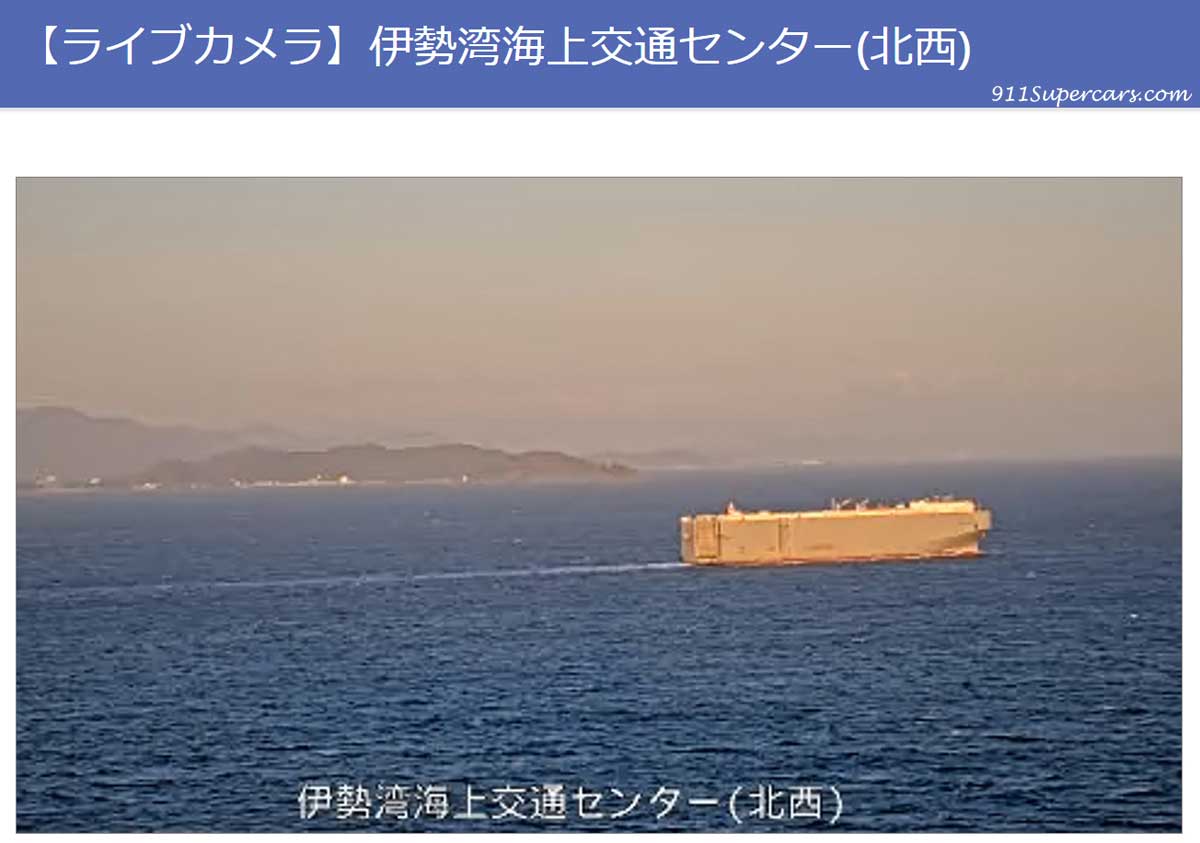
◆You can see what happened when we followed the ship through the Isewan Vessel Traffic Center's live camera here:Porsche Purchase Note 8: Porsche 911 Route Tracking Part 3 (Toyohashi Port)
Well, it was a day where a lot of things came together for me.
And in the end, I remembered the live camera and my Shinojima experience ended with me being captivated by the Porsche ^^
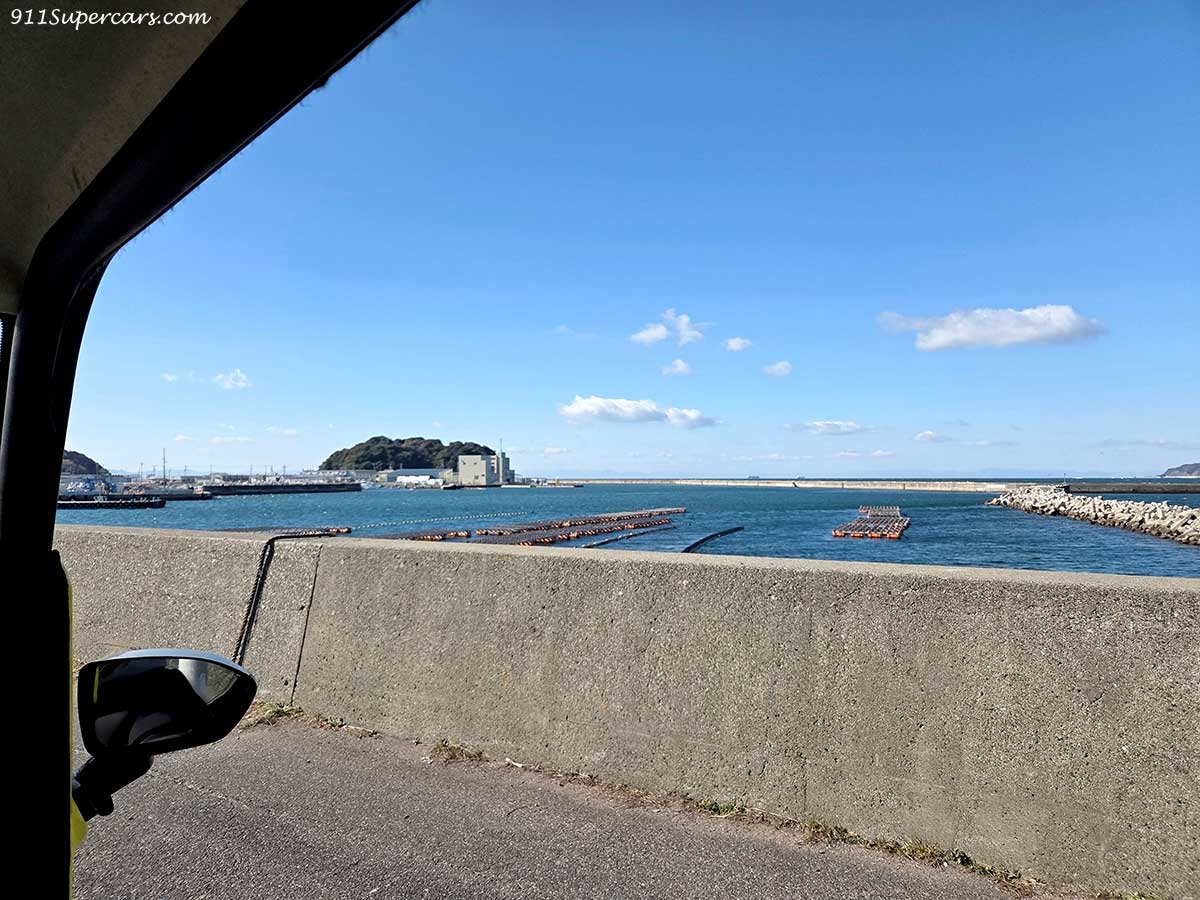
After spending just over an hour on the island, we returned the tuk-tuk and headed back to the high-speed ferry terminal. Thank you, tuk-tuk! It was so cute!
Thanks to him (?), we were able to get around Shinojima very efficiently and enjoy the attractions that we don't normally experience.
On the way back, we took the high-speed ferry "Hayabusa." This one also moved quickly, leaving Shinojima at 11:05 and arriving at Kawa Port at 11:35.
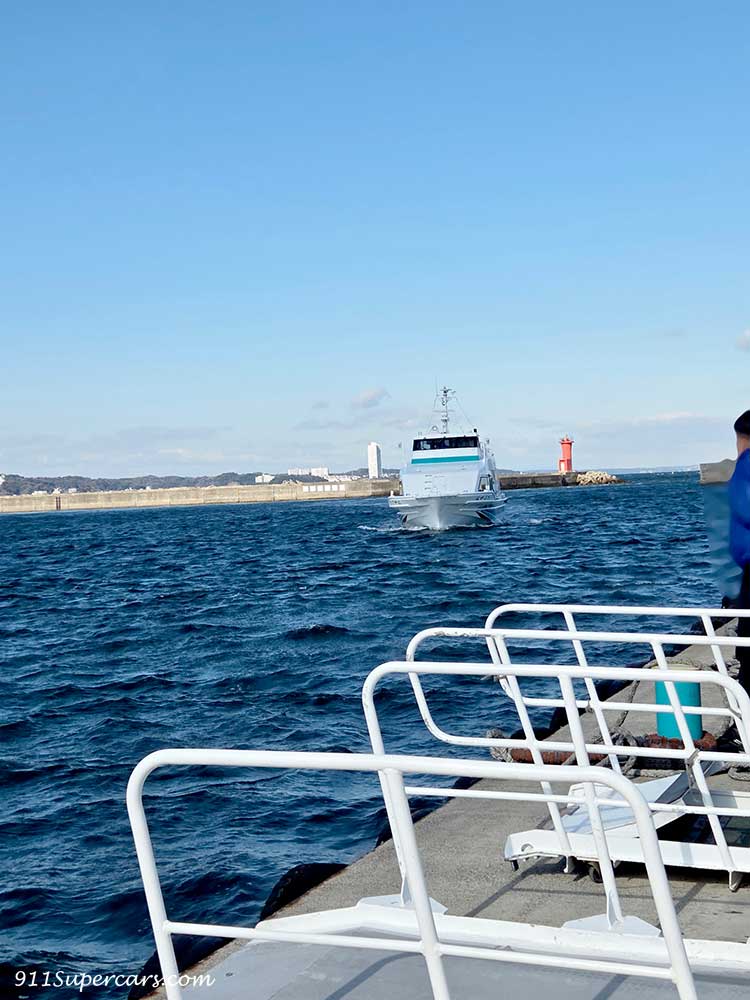
We got off the boat and headed to the parking lot at Kawa Port, where the GT3 was waiting for us.
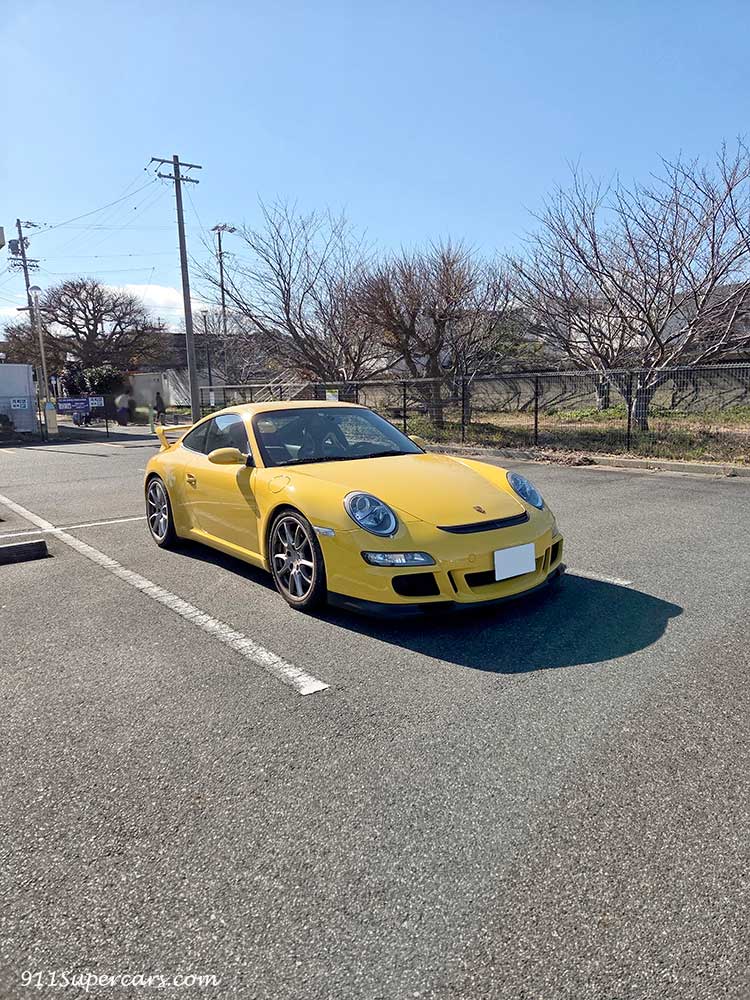
Since this was the last day of a three-day weekend, I was worried about the traffic jams on the way back, so I decided to get back home as quickly as possible and left Chita Peninsula early.
As expected, there was a bit of traffic congestion around Atsugi and Ebina on the way back, but it wasn't too bad yet, so I was able to get home around 5:30pm with plenty of time to spare.
It was a wonderful day, with a great time spent on Chita Peninsula and Shinojima from morning to evening. The GT3 drive that day covered a distance of 770 km.
I really love driving in the GT3. It's fun.
I am so glad that I came across this Porsche. Thank you for letting me visit Shinojima.
reference site:
◆Shinojima Fun Guide
◆Meitetsu Maritime Sightseeing Boat Schedule
◆Shinojima DIEUX TERRACE
Related article:
◆Head to Chita Bamboo Forest in a Porsche 911 GT3
◆Traveling around Kanazawa and Ise in a Porsche 911 GT3
◆Visit to Ise Shrine in 2024 with a Porsche 911 GT3
◆To end 2023, go to Ise Grand Shrine with Carrera T
◆Camper experience 2: Ise Jingu, ferry, Hamamatsu
◆Drive to Ise Jingu with Porsche 718 Cayman ... From ~ Hamamatsu eel! !!
◆Drive 1,100 km in a Porsche 911 GT3 (997.1)
◆The 997 Porsche 911 GT3 has been delivered
I'm Rika, the author of this article. Since I got my hands on a Porsche 911, I've been completely hooked on Porsches and I can't stop loving them, so I started this blog. My favorite cars are the 911 Carrera (2/991), 911 Carrera Cabriolet & 911 Carrera T (1/992), GT3 (1/997) and 718 Cayman GT4 RS.
 English
  Japanese