
Porsche chose the 981 Boxster GTS as the source for its engine sound.
Recently, Porsche announced that development of the all-electric 718 Boxster has finally entered its final stages.
From the announcement, it became clear that the Porsche 718 Boxster EV will also simulate the sound of an internal combustion engine and the operation of a transmission, much like recent electric vehicles.
For details of the announcement, please click here.:Development of Porsche's first all-electric 718 Boxster is finally entering its final stages.
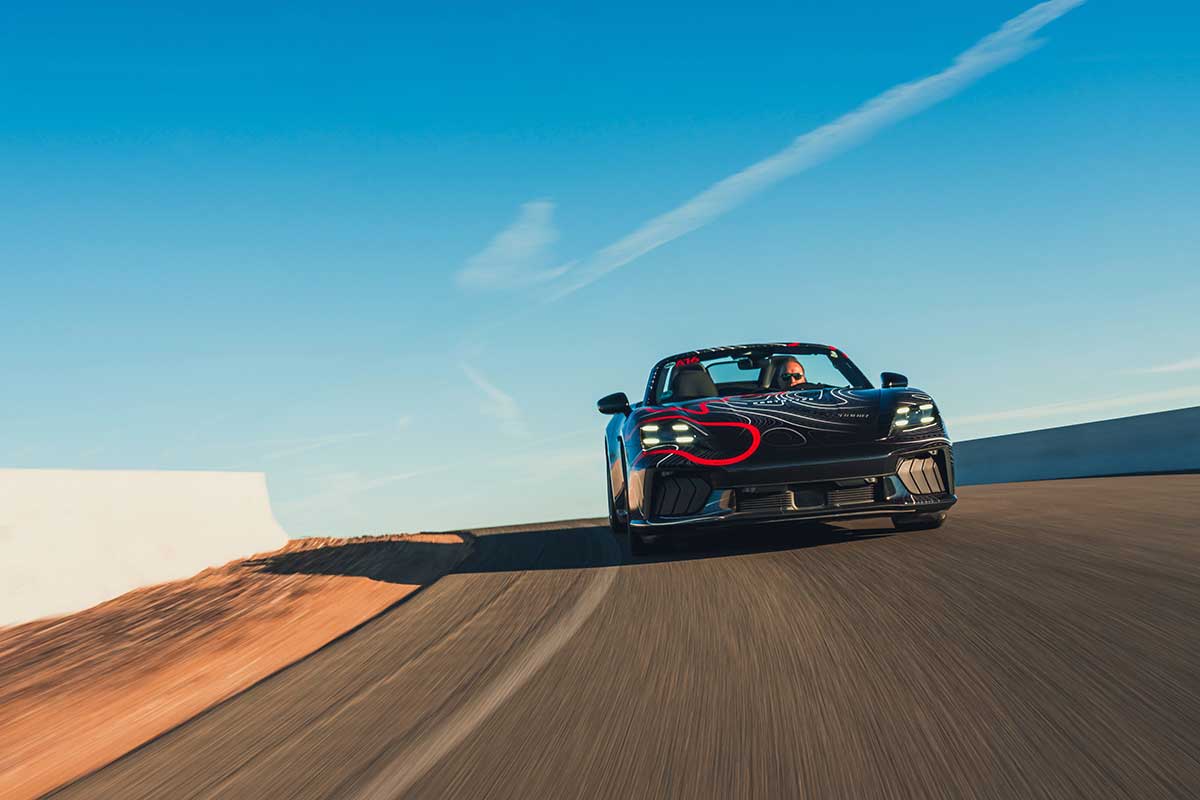
The simulated transmission system first introduced in the Taycan.This feature, also called "E-Shift" in the new Boxster, is standard equipment and can be switched on or off using a button on the steering wheel.
And the engine sound that Porsche chose to use as the basis for this project was the sound of the 3.4-liter naturally aspirated horizontally opposed six-cylinder engine that was installed in the 981 Boxster GTS.
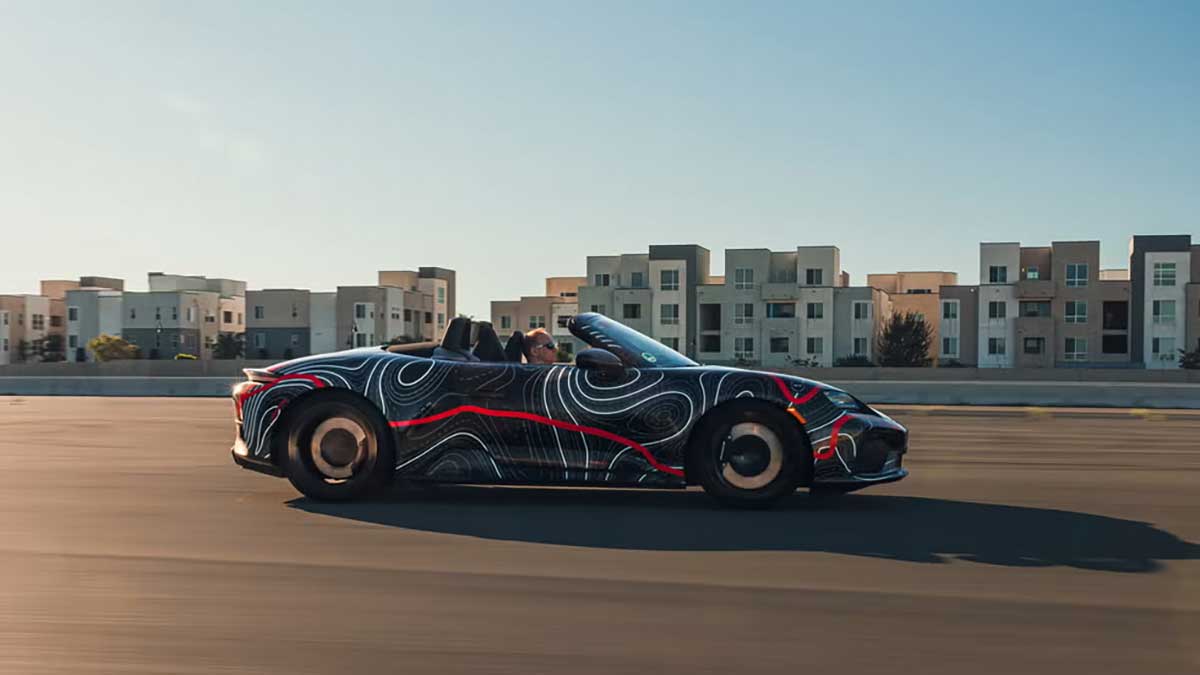
So why did it end up sounding like the 981 Boxster GTS?
This time, Sebastian Lefevre, the leader of the 718's advanced driver assistance system development team, spoke to overseas media about the reasons behind this, so I took a look at what he said.
He said that this sound sparked quite a bit of discussion within the company. Well, I suppose that's understandable...
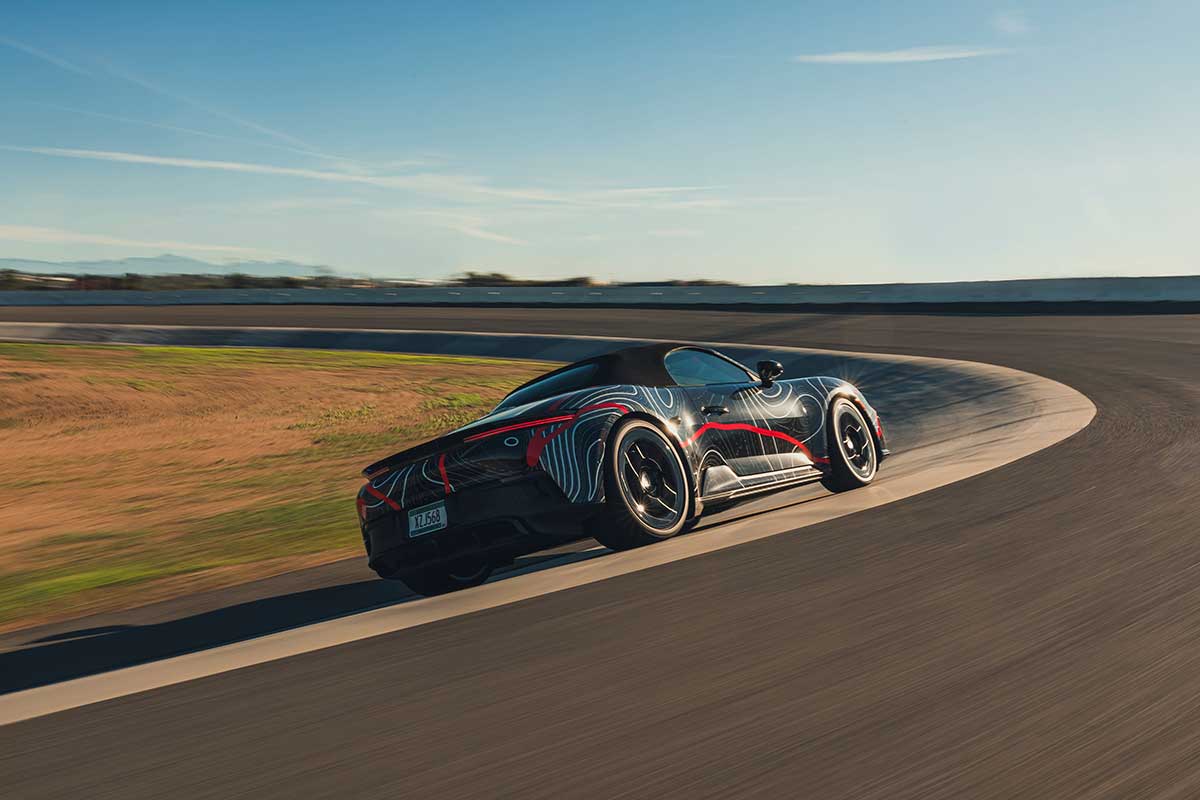
I felt that the sound of the previous generation 718 Boxster's 4.0-liter engine was a little "too soft," and I rejected the sound of the 718's horizontally opposed four-cylinder engine because "there have been criticisms of its sound in the past."
And within the company, it was believed that the 6-cylinder sound of the 981 GTS was a little bit louder, and that it would feel more popular and familiar with our old customers, which is why it was adopted.
Simulated engine sound of the new Boxster EV
To create the simulated engine sound for the Boxster EV, they first installed numerous microphones both inside and outside the 981 Boxster GTS. They then used these microphones to measure the engine's sound across its entire RPM range.
Then, the measured sound was taken into the Boxster EV, and the sound was played through the built-in speakers and measured again.
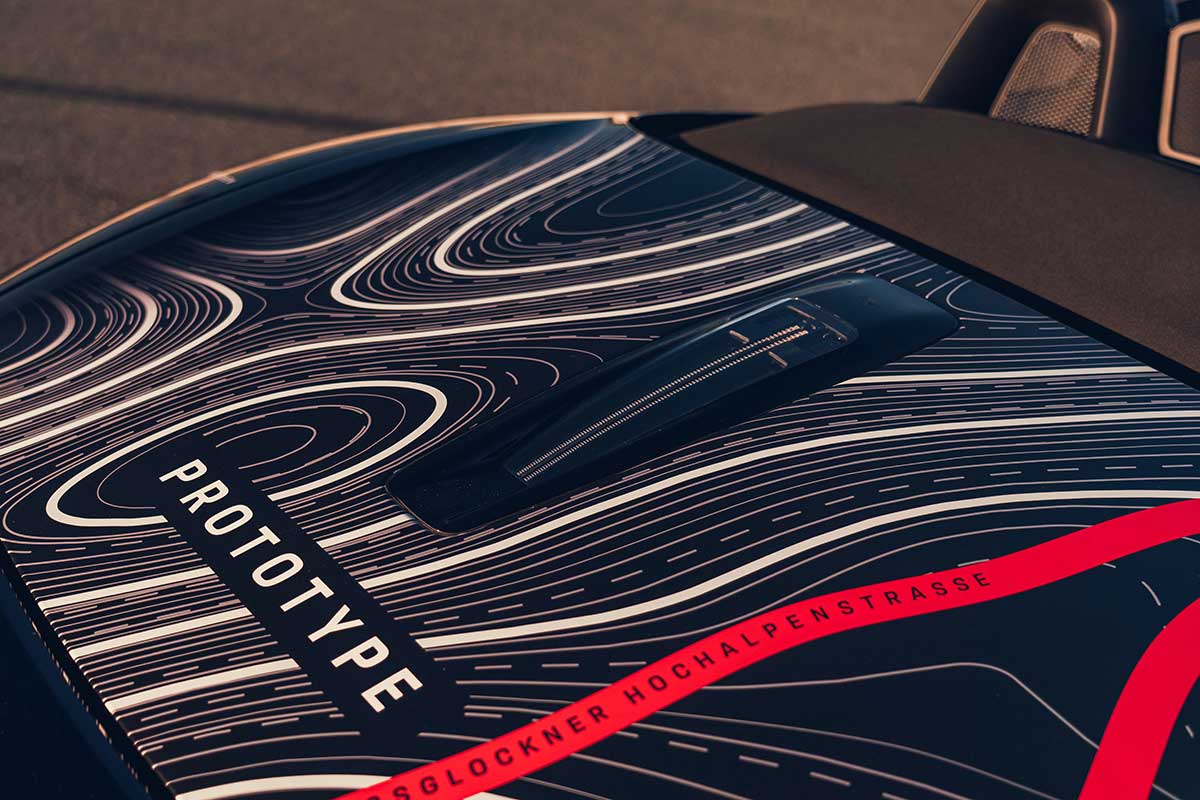
Incidentally, the Boxster EV is equipped with two speakers to reproduce this simulated engine sound, one of which is located outside the vehicle.
The main purpose of these external speakers is apparently "to allow occupants to enjoy the engine sound even when the convertible top is down."
Furthermore, by making the sound seem to come from behind the driver and passenger, they are trying to recreate a sound experience as if the engine were mounted mid-ship.
What's more, they've even designed it so that the volume of the sound inside the car increases when the top is opened, which shows incredible attention to detail.
Apparently, you can also hear a faint backfire sound when downshifting... However, according to a journalist who actually test-drove it, it doesn't quite replicate the experience of hearing the real engine and exhaust sounds echoing off the mountainside or buildings.
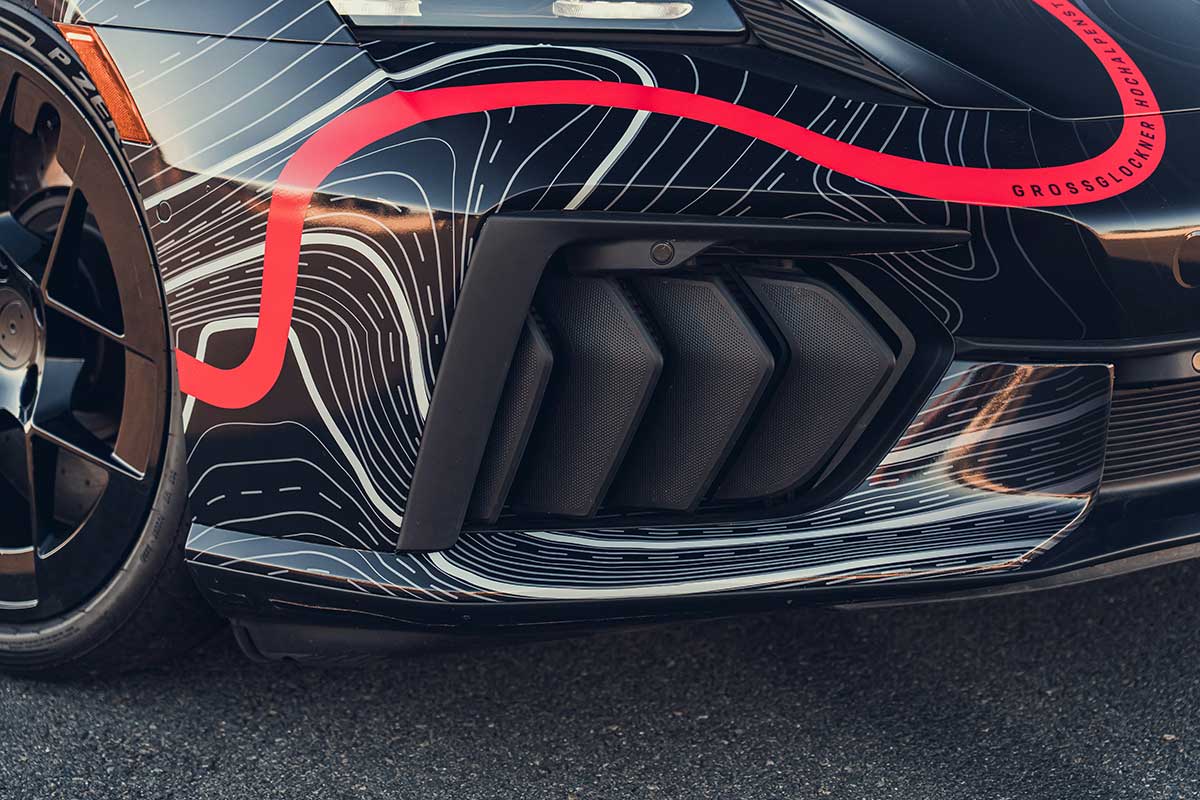
Virtual 8,000rpm redline
When using launch control to start the Boxster EV, the torque of the electric motor is periodically changed to create the feeling that the car is about to take off.
Furthermore, it's possible to raise the virtual engine speed all the way to the red zone, and by utilizing brake torque, it even replicates the feeling of being thrown forward, similar to hitting the rev limiter in a gasoline engine car with manual shifting.
Furthermore, it seems that even engine braking is reproduced by utilizing regenerative braking with an electric motor during downshifts.
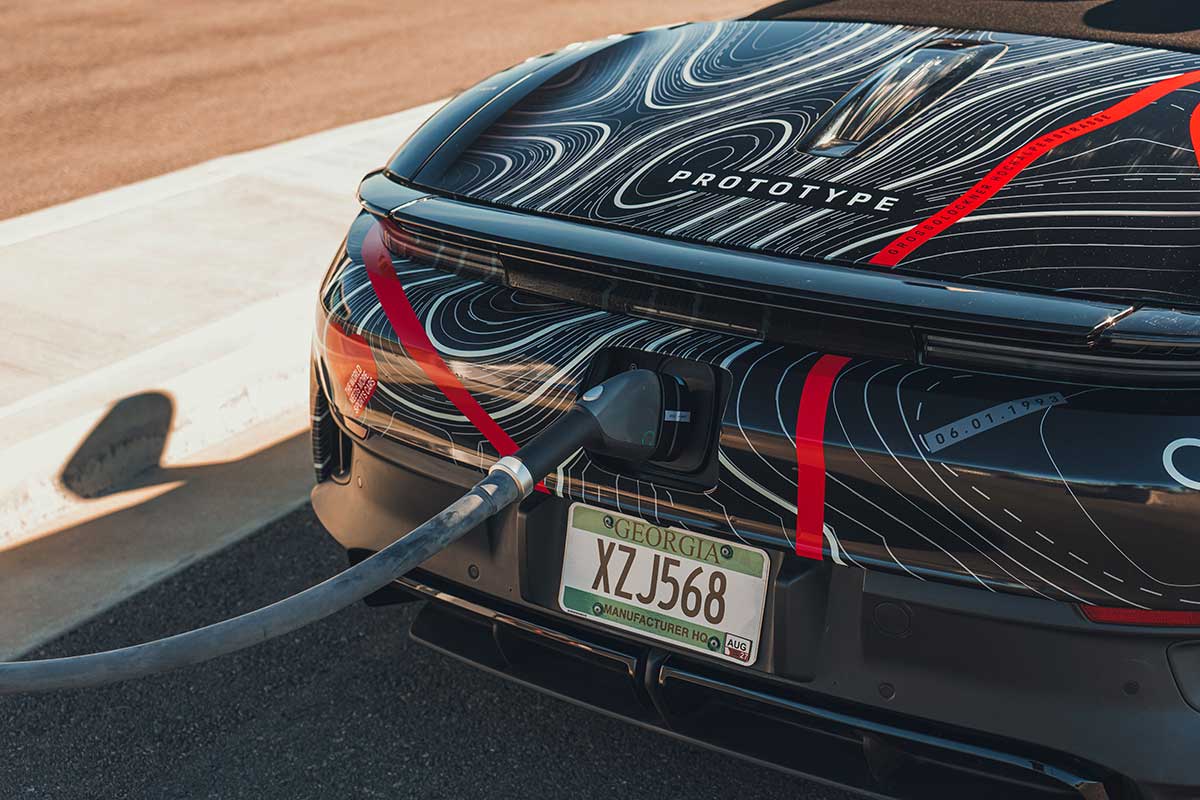
Incidentally, in this prototype, the virtual redline was set to start at 8,000 rpm, which is a slightly different setting from the actual 981 Boxster GTS.
Apparently, the red zone on the tachometer of a real 981 Boxster GTS starts at 7,600 rpm, so with the EV, you can get the feeling of revving the engine 400 rpm higher than the real thing.
Of course, this extra 400 rpm doesn't affect actual driving performance, because Porsche decided not to reproduce the torque curve of a horizontally opposed six-cylinder engine.
In other words, they haven't deliberately limited the performance of the electric motor in order to faithfully reproduce the acceleration characteristics of a gasoline engine car. Instead, they've made the most of the electric motor's inherent performance, and the system is designed so that a virtual 7th gear shifts according to the increase or decrease in vehicle speed.
The way the gears are shifted differs depending on the selected drive mode, just like in conventional Porsche PDK systems, and it is possible to choose between manual and automatic shifting.
Also, apparently the engine sound coming from the speakers changes depending on whether you're pressing the accelerator or releasing it.
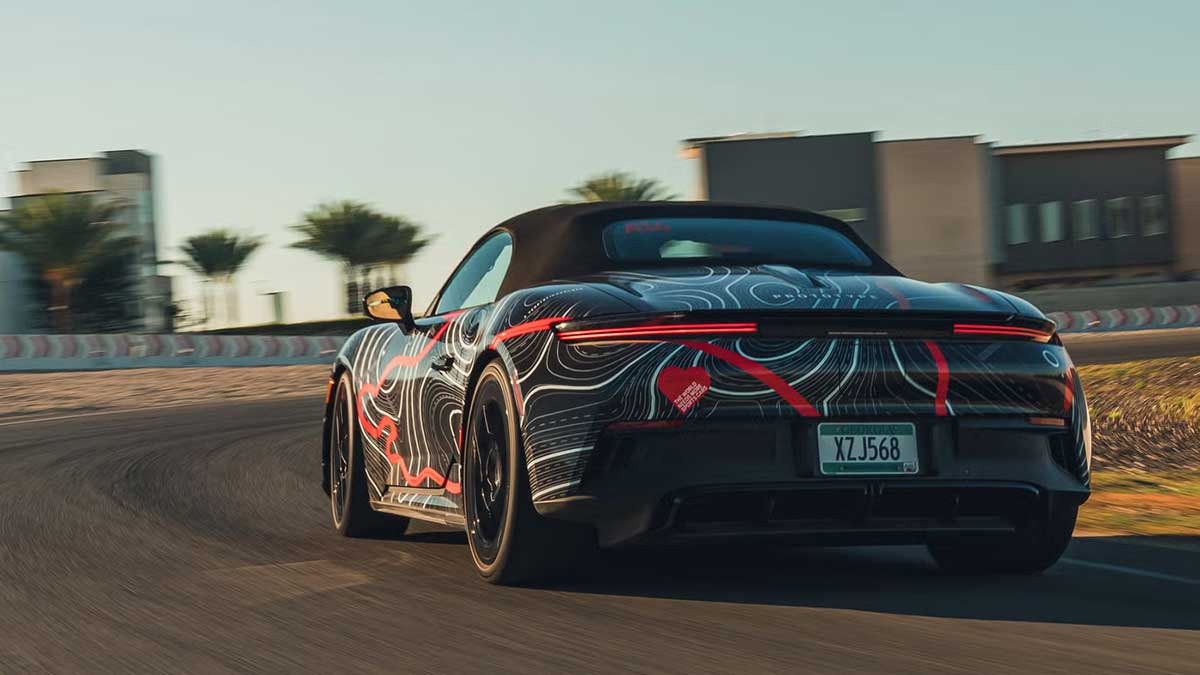
According to a journalist who actually test-drove the Boxster EV on a racetrack, the simulated engine sound was helpful in judging braking points and accelerating, and he said that as soon as he turned off E-Shift, he lost his sense of driving on the racetrack.
Indeed, when driving on a race track, I think we unconsciously sense the current state of our car from the sounds that change depending on the engine speed and gear shifts.
Without those sounds, it would be difficult to intuitively judge the car's speed and acceleration without checking the speedometer, wouldn't it? Of course, this might be something you get used to...
The simulated sound of the new Boxster EV...the fact that it's not a futuristic EV sound like the Taycan, but rather the sound of previous Boxster models equipped with gasoline engines, seems like another new attempt by Porsche.
Source:
◆Here's How the Porsche 718 Boxster EV's Fake Flat-Six and PDK Work
◆The Porsche 718 Boxster EV Does a Convincing Impression of a Sports Car
Related article:
◆Development of Porsche's first all-electric 718 Boxster is finally entering its final stages.
◆An EV with shifting gears? Porsche Taycan to feature virtual 8-speed shifting 'E-Shift'.
I'm Rika, the author of this article. Since I got my hands on a Porsche 911, I've been completely hooked on Porsches and I can't stop loving them, so I started this blog. My favorite cars are the 911 Carrera (2/991), 911 Carrera Cabriolet & 911 Carrera T (1/992), GT3 (1/997) and 718 Cayman GT4 RS.
 English
 Japanese